New Zealand's cherry industry is facing one of its toughest seasons in decades, with heavy rain and wind across Central Otago slashing export volumes and pushing large volumes of fruit into processing or waste streams.
Eden Orchards processor Gary Bignell says the 2025-26 season is shaping up as one of the worst he has seen in more than 40 years in the industry. With a quarter of the season left, the damage has been severe.
 © Eden orchards
"We're probably three-quarters of the way through the season, and it's right up there as one of the worst we've had," Bignell says. "Some orchards are seeing 60 to 70 per cent of their crop going straight into the waste bin."
The rain has been a big problem. The crop size has been what Bignell would characterise as heavy, but much of the fruit has been wasted due to splitting.
"When you've got good-sized fruit and rain sits on it for days, the cherries just can't handle it," Bignell explains. "Large cherries are especially prone to splitting when the weather doesn't clear."
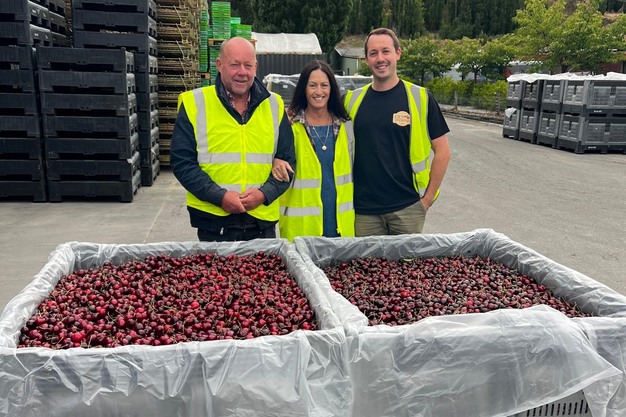
The impact on export volumes has been stark. In a normal year, New Zealand exports around 5,000 tonnes of cherries, mainly to Asian markets where premium prices are paid for size and quality. This season, export shipments had reached only about 900 tonnes as of last week.
"It's going to be one of the lowest export seasons we've had in a long, long time," Bignell says. "I'd be surprised if we even get to half of a normal year. I'd put money on exports finishing below 2,500 tonnes."
 © Eden orchards
That shortfall is placing significant financial pressure on growers. Many of them needed a good year, and now some operations may struggle to remain viable.
"You can handle one bad year, maybe push through two," Bignell says. "But when you get three poor seasons in a row, which some growers have had, it puts a lot of strain on businesses. There will likely be some forced sales."
Export fruit takes priority because of higher returns, with the domestic market absorbing second-grade cherries. However, Bignell notes that New Zealand's local market is limited in size and cannot absorb the volume of downgraded fruit in a season like this.
"There's simply too much fruit for the local market to take," he says. "Once export and local demand are met, there's still typically 10 to 20 per cent that doesn't fit either category."
That fruit increasingly finds a home in processing. Eden Orchards specialises in turning downgraded cherries into juice and other products, a pathway that didn't exist for many growers until recent years.
"Before processing options like ours, growers often had to pay to dump that fruit," Bignell says. "Now at least some value can be recovered."
Export prices remain relatively strong, but volumes are what has been hit hard by the rain and wind that have been features of Otago's summer.
"The demand is there," he says. "It's the weather that's let us down."
For more information:
Gary Bignell
Eden Orchards
Tel: +6421369292