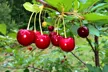
Over the past decade, South Africa's cherry industry has expanded from a small niche segment into a more established part of the deciduous fruit sector. Industry data shows steady growth in planted area, regional diversification, and rising export activity, alongside ongoing production and market challenges.
Cherry plantings increased from 185 hectares in 2012 to 819 hectares by 2024. This expansion reflects a broader trend among South African deciduous fruit producers to diversify crops and production systems.
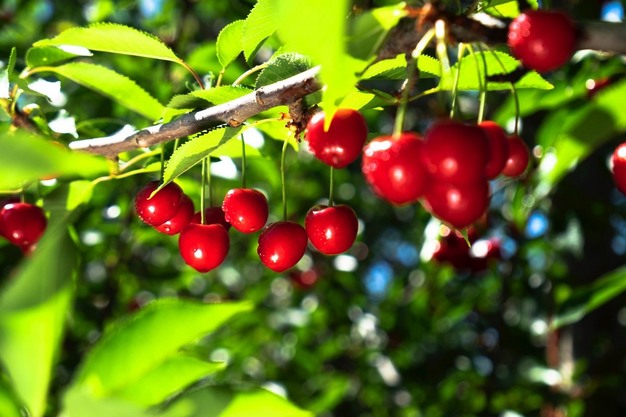
A key driver of expansion has been the development of low-chill cherry cultivars. Traditional varieties typically require more than 800 hours below 7°C during winter, restricting production to colder regions. New cultivars require as few as 350 cold units, enabling production in warmer areas and reshaping the geographical distribution of orchards.
 © Hortgro
The Western Cape remains the main production region, accounting for 61% of total cherry plantings. Expansion within the province is uneven and concentrated in specific production zones. Gauteng and the Northwest together represent 28% of national plantings, indicating a broader geographic spread. In contrast, production in the Free State has declined, reflecting increasingly challenging climatic conditions.
The domestic market has remained the primary outlet, absorbing about 60% of production over the past decade. Cherries' short shelf life and South Africa's limited share of global supply have reinforced the role of the local market. Export volumes have increased, however, averaging 37% of total production over the past five years. The export window runs from week 40 to 52, with peak volumes between weeks 46 and 48. Approximately 70% of exports are shipped by air, mainly to the UK, the EU, and the Middle East.
Future growth is expected to depend increasingly on export markets. Access to new destinations, particularly China, is under discussion and could alter current trade patterns, as domestic demand alone is unlikely to absorb rising volumes.
Around 41% of existing cherry trees are not yet in full production. As these orchards mature, total output is expected to increase substantially over the next five years. Managing fruit size and quality will be critical, as export markets typically favour fruit sizes of 28 mm and above.
Production challenges remain significant. Climate-related risks include hail, frost during flowering, and rainfall close to harvest, which can lead to fruit splitting. Protective netting is widely used to reduce exposure, but it adds to capital costs. Cherries also require rapid post-harvest cooling to 8°C within two hours, which can be difficult during Western Cape summer conditions.
South Africa currently produces about 0.1% of global cherry volumes, well below major producers such as Chile and the United States. The industry continues to rely on its early-season window, entering markets ahead of Chile, where price levels typically decline once Chilean volumes increase.
 © HortgroFor more information:
Hortgro
Tel: +27 (0) 21 870 2900
Email: [email protected]
www.hortgro.co.za