The future of Maris Piper within the UK potato sector was debated during an industry discussion, with contrasting views on whether the long-established variety remains suitable under current market and production conditions.
Katy Pook, Head of Brand and Marketing at Greenvale, argued that Maris Piper's position is weakening. She noted that the variety was developed nearly 70 years ago to address pest pressures and production systems that differ from those faced by growers today.
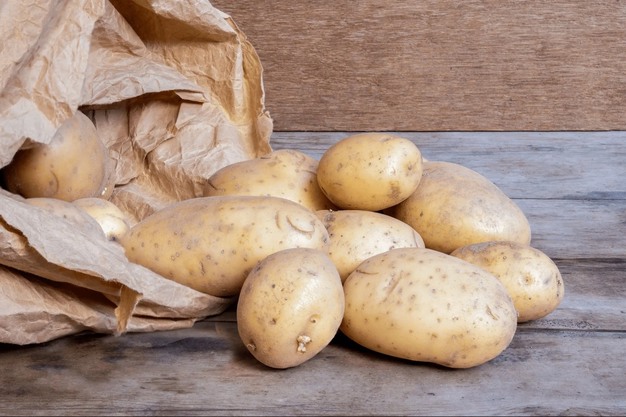 © GB Potatoes
"The food and farming industry looked a little different then than it does now," she said.
Pook outlined how the sector has shifted from many small, mixed farms supplying local markets to fewer, larger producers serving national distribution networks. She compared Maris Piper's situation with the earlier dominance and eventual decline of the Majestic variety, which accounted for 60% of the market when Maris Piper was introduced in 1966.
Although Maris Piper was widely adopted due to resistance to potato cyst nematode and reliable yields, Pook said current challenges include greater pest and disease pressure, fewer chemical control options, weather volatility, and higher assurance demands. She added that Maris Piper covered nearly a quarter of the UK potato area in the early 2000s but now accounts for around 10%, following a broader contraction in planted area. In fresh retail, its volume share has fallen from 19.5% to 16.5% over the past four years.
She also referred to consumer feedback, noting higher complaint rates related to quality, bruising, and waste, particularly between March and July. According to Greenvale research, she said most consumers buying Maris Piper would switch to other varieties if it were unavailable.
Gordon Stark, Director at Taygrow, presented a different view, stating that Maris Piper continues to have a role in the sector. He pointed to its ability to adapt across multiple market segments and its continued relevance in resistance strategies as pest pressures change.
Stark said annual production remains between 500,000 and 700,000 tons and highlighted agronomic and economic factors such as low seed costs and the absence of royalties. He acknowledged that climate conditions have made production more challenging in parts of England, with increased cultivation in Scotland.
Summarising the discussion, GB Potatoes Chair Alex Godfrey said those arguing that Maris Piper's role is diminishing held a narrow majority, adding that debate around the variety is likely to continue.
 © GB PotatoesFor more information:
GB Potatoes
Tel: +44 (0) 1507 353774
Email: [email protected]
www.gb-potatoes.co.uk