The U.S. Potato Expo in Dallas took place amid political uncertainty, including tariff measures, strained international trade relations, and tighter controls on migrant labour. The administration of Donald Trump provided farmers with close to record support payments of about US$40 billion in the previous year, although these measures were not specifically aimed at potato production.
The combined potato crop of the United States and Canada was slightly smaller in 2025 compared with 2024, at around 24.4 million tons. Supplies of processing potatoes nevertheless remain ample. Market participants expressed concern about stronger competition in the frozen fries and chips segment, particularly from China and India, where export volumes have doubled and increased by about one third, respectively, over the past year. Trade tensions and tariff-related responses are affecting demand for U.S. potato products in the Asia-Pacific region, while imports into the European Union are declining.
 © GB Potatoes
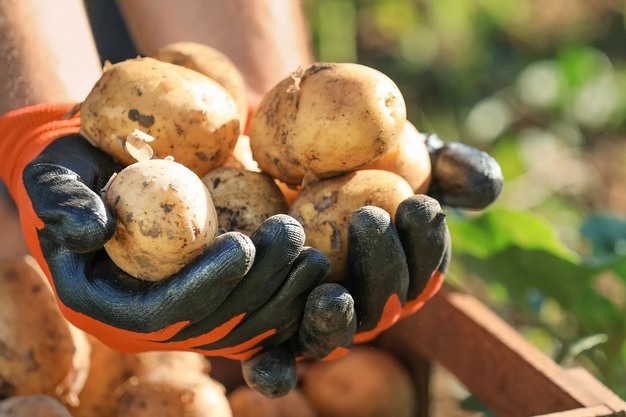
Most processing potatoes in North America are sold under contract, and expectations are that both contracted volumes and planted area could decline in 2026. The fresh potato market is more exposed to spot pricing, where prices have fallen below production costs. This has reduced returns for growers but has increased affordability for consumers. Data from the United Potato Growers of America show that potatoes remain among the most affordable vegetables in the U.S. A dollar buys about 1.1 kilograms of russet potatoes, 765 grams of red potatoes, or 720 grams of yellow potatoes. By comparison, a dollar buys about 730 grams of green cabbage and around 90 grams of mushrooms.
Fresh demand
Demand for fresh potatoes has increased. According to Potatoes USA, 51 per cent of U.S. potato sales are now in the retail channel and 49 per cent in foodservice, compared with 42 per cent retail and 58 per cent foodservice in 2019. Potatoes continue to rank as the most consumed vegetable in the country, and consumer perceptions of their health attributes improved in 2025. Updated dietary guidelines released by the U.S. health authorities during the expo placed potatoes within the healthy vegetable category, although fries and crisps may still be affected by potential ultra-processed food regulation linked to vegetable oil use, an issue raised by Robert F Kennedy Jr.
Varietal discussions also featured at the event. Following a debate at GB Potatoes in Harrogate over the future of Maris Piper, a similar discussion in Dallas focused on the long-term role of the Russet Burbank variety, first selected in 1873. The general view was that older varieties may gradually lose share as newer, more disease-tolerant and consumer-focused types are developed. Potatoes USA has called for a more coordinated approach to variety development to strengthen competitiveness.
Weather remains a dominant factor in global potato production. Generally favourable conditions in the U.S. in 2025, aside from drought in eastern Canada, supported crop development. Looking ahead, concerns are emerging about reduced snowpack in the northwestern U.S., which could affect irrigation water availability, alongside the potential transition to an El Niño weather pattern in 2026.
 © GB PotatoesFor more information:
GB Potatoes
Tel: +44 (0) 1507 353774
Email: [email protected]
www.gb-potatoes.co.uk