South Korea's Animal and Plant Quarantine Agency has uncovered an organised scheme involving the illegal import of agricultural products and nursery stock from China without quarantine procedures. By seized volume, the case is the largest recorded since the agency was established.
On the 12th, the agency said it had identified 12 individuals, including three intermediary importers and nine actual importers, who brought quarantinable agricultural products such as dried jujubes, raw peanuts, and dried red peppers into the country via Incheon Port between December 2023 and January 2025. Banned items, including fresh fruit and apple nursery stock, were also included. Nine suspects are to be referred to the Incheon District Prosecutors' Office this month.
 © South Korea’s Animal and Plant Quarantine Agency
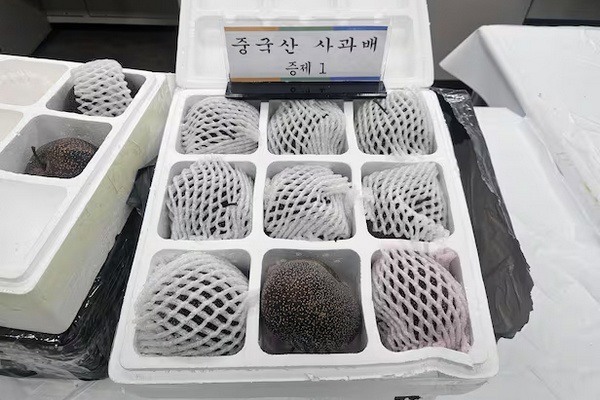
The total volume seized reached 1,150 tons, with an estimated black-market value of about US$12.2 million. In January, a regional investigation team discovered 33 tons of Chinese dried agricultural products during a warehouse search in Gimpo. Digital forensic analysis of seized mobile phones later confirmed that over roughly one year, agricultural products and nursery stock equivalent to an average of ten containers per month had been systematically imported.
Investigators found that the group colluded with Chinese exporters and used a so-called "curtain trick" to conceal the products. The imports were declared to customs as pet supplies, while agricultural products were hidden behind them in the containers.
Among the seized goods, Chinese apple nursery stock and fresh fruit are classified as host plants for fire blight and are subject to a total import ban. Dried agricultural products such as dried red peppers and dried jujubes also require mandatory quarantine procedures before they can be imported or distributed. Under the Plant Protection Act, illegal imports of this type can result in penalties of up to three years in prison or fines of up to 30 million won, equivalent to roughly US$23,000.
During the investigation, the agency for the first time applied an alternative disposal method by composting the 33 tons of seized dried agricultural products instead of incinerating them. This process generated around 300 tons of compost, which was supplied free of charge to nearby farms.
To address organised illegal imports, a dedicated regional investigation team was established in April last year. Through December, the unit filed criminal charges in 63 cases and referred 34 cases involving 47 individuals to prosecutors.
Choi Jeong-rok, head of the Animal and Plant Quarantine Agency, said, "The indiscriminate inflow of unquarantined agricultural products, nursery stock, and fresh fruit is directly linked to the entry of exotic pests and diseases and damage to domestic agriculture," adding, "We will expand dedicated investigative personnel and strengthen investigative capabilities to respond sternly to organized violations of the law."
Source: ChosunBiz