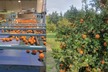
Accounting for nearly 30% of global GDP and population, the Regional Comprehensive Economic Partnership (RCEP) is considered the world's largest free trade area and is creating expanded market access for Viet Nam's agricultural products. Within this framework, fruit and vegetables have emerged as one of the fastest-growing export categories.
Data from the Viet Nam Fruit and Vegetable Association show that China remains the dominant destination, accounting for around 65% of total fruit and vegetable exports. In 2025, total export turnover to China exceeded US$5 billion. Other RCEP markets also posted strong increases, with exports to Malaysia rising by nearly 80% year on year and shipments to Australia increasing by around 30%.
According to exporters, trade with RCEP members has been supported by flexible rules of origin. Unlike other free trade agreements that require products to be wholly of Vietnamese origin to qualify for tariff preferences, RCEP allows cumulation of origin within the bloc. Under this mechanism, raw materials sourced from one or more RCEP member countries can be processed in Viet Nam and still qualify for certificates of origin, enabling preferential tariff treatment.
Despite these advantages, export performance across the RCEP region also highlights emerging constraints. Several ASEAN markets have shown signs of stagnation or reduced import demand. Nguyen Chanh Trung, Director of Hung Viet Rice Co., Ltd, said that in 2025, rice exports no longer sustained the growth seen in earlier years, as major buyers such as Indonesia and the Philippines cut back on imports, a trend expected to continue. To make better use of RCEP opportunities, he noted that companies need to redirect efforts toward markets such as China, Japan, and the Republic of Korea, with a focus on higher-quality products and further processing.
Competitive pressure within the bloc remains high due to overlapping production profiles among member countries. Viet Nam faces direct competition from Thailand, Malaysia, the Philippines, Laos, and Australia in products that overlap with its export portfolio, including rice and tropical fruit.
According to the Agency of Foreign Trade under the Ministry of Industry and Trade, while Thailand and Viet Nam supply a large share of China's durian market, other suppliers such as Malaysia, Myanmar, and Laos are increasing volumes, particularly in processed products. In the pomelo category, Laos has become China's largest supplier, while Viet Nam, despite substantial production capacity, has not yet achieved a similar market position.
Across the RCEP region, which spans Northeast Asia, Southeast Asia, and Oceania, Viet Nam's agricultural exports continue to show growth potential. However, each market operates with different demand structures and regulatory requirements. China offers large volumes but intense competition, ASEAN markets are undergoing changes in demand and supply patterns, and Australia and New Zealand apply strict standards and require longer-term engagement.
Businesses indicate that taking full advantage of RCEP will depend on developing market-specific strategies, improving production chain organisation, and strengthening competitiveness by product segment rather than relying solely on tariff preferences.
Source: Nhan Dan