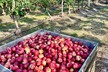
Chile aims to expand fruit exports to India, which it considers a market with strong growth potential. Iván Marambio, President of Frutas de Chile, said the goal is to make India the sector's third key market, after the United States and China. Success will rely on improvements in trade agreements, logistics, and bilateral relations.
A key element of this strategy is enhancing the Comprehensive Economic Partnership Agreement (CEPA) between Chile and India. Marambio notes that this agreement extends beyond tariff reductions to strengthen institutional ties, covering technical, regulatory, and cooperation aspects. Regarding tariffs, he noted that certain products, such as cherries, already enter duty-free, creating significant opportunities to expand market presence where penetration remains limited.
 © Frutas de Chile
"Chile currently exports around 50,000 tons of fresh fruit to India each year, experiencing about 40% growth over the last two years. Apples lead the export categories, followed by kiwis, pears, blueberries, and cherries. The goal is to double these volumes and achieve levels comparable to Brazil in the near future," Marambio stated, highlighting India's large population and its 6% to 7% annual economic growth.
From a consumption perspective, the Indian market has unique traits. "It features a young, highly digitalized population with a keen interest in nutrition and health. These factors impact marketing channels, with e-commerce and quick commerce becoming more prominent, and they also affect consumption occasions related to cultural events and social celebrations in India," he said.
 © Frutas de Chile
However, growth faces significant challenges. "The primary non-tariff barrier is maritime logistics. The absence of direct routes and the traditionally long transit times—40 to 50 days—limit the ability to increase shipment volumes. While there have been occasional reductions in transport durations in recent years, establishing regular services that enable stable planning remains a challenge." Additionally, India's cold chain infrastructure remains unevenly developed, though Marambio notes substantial progress in recent years.
In this scenario, collaboration between the public and private sectors has been crucial. Joint delegations, coordination with health authorities, and diplomatic negotiations are part of an agenda to enhance access, reduce barriers, and strengthen Chilean fruit's presence in India. "It is a market that demands presence and local knowledge," Marambio stated. Relationships with importers are strong, but the next goal is to engage more deeply with the end consumer, he added.
 For more information:
Iván Marambio
Frutas de Chile
Chile
Tel: +56 9 9991 5564 / +56 2 2472 4701
Emai: [email protected]
www.frutasdechile.cl