New research from the University of the Fraser Valley indicates that rising temperatures are likely to reduce cranberry yields in Canada. The study was carried out by the university's BERRI Lab with funding from the B.C. Cranberry Growers Association.
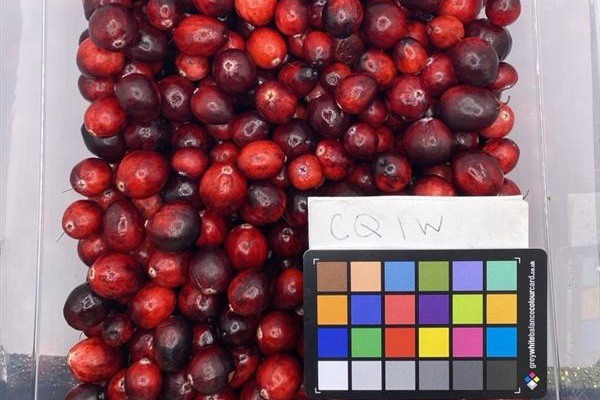
The research involved controlled-environment and field trials led by Agriculture Science student Yowana Kanyumwa. Six cranberry varieties were tested under conditions simulating a temperature increase of 2 degrees Celsius. The trials showed lower yields across all varieties when grown in the warmer environment.
 © University of the Fraser Valley
Working in the BERRI Lab and in a local field, Kanyumwa observed that higher temperatures resulted in fewer berries. "My research also showed that higher temperatures impacted the size of the cranberry plants," she said. "The good news is that the weight and firmness of the berries didn't see much impact at all."
The findings support computer modelling published in 2022 by BERRI Lab director and Canada Research Chair Dr. Lauren Erland. The trials also showed variation between varieties, suggesting that some may be better suited to warmer conditions, which could influence future planting decisions.
Canada is the world's second-largest cranberry producer after the United States, according to Agriculture Canada. Around 95 per cent of national production takes place in British Columbia and Quebec. In 2024, British Columbia produced 45,988 metric tons of cranberries.
The cranberry sector plays a role in rural economies. According to Ocean Spray Cooperative, the industry contributes more than US$400 million in economic activity and supports close to 3,000 jobs, mainly in rural areas.
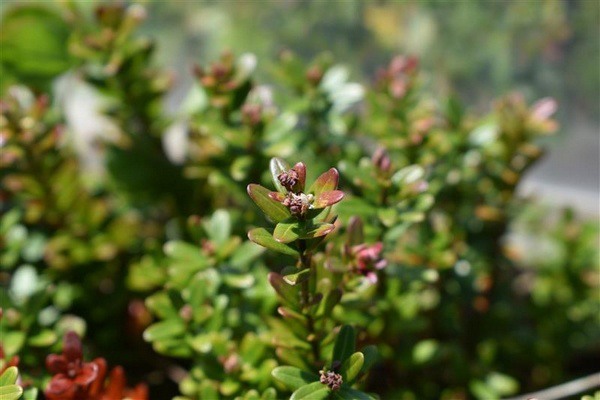 © University of the Fraser Valley
Researchers are now examining why higher temperatures reduce yields. Dr. Erland said the next phase will focus on plant processes. "This means from a physiological perspective, and also from a chemical and hormonal perspective," she said. "Is there less fruit because the plants are making fewer flowers? Or are there the same number of flowers, but they're not turning into fruit? And what are the internal signals in a plant that are controlling this?"
"If we can answer these questions, then we hope we can give growers solutions."
Potential outcomes include recommendations on climate-tolerant varieties, adjustments to field management practices to reduce heat stress, or the development of new cranberry plants adapted to warmer conditions. The BERRI Lab involves undergraduate students from agriculture, biology, biochemistry, and environmental science programs in the research.
Kanyumwa said the project provided exposure to laboratory-based research alongside field work and contributed to her interest in future research roles.
For more information:
Stacy Kirpichova
University of the Fraser Valley
Email: [email protected]
www.blogs.ufv.ca