Through efficient water management and planning that combines geographical and varietal diversification, the Peruvian agro-export company Agrokasa is successfully managing to reach various markets with its table grapes, blueberries, avocados, and asparagus.
 © FreshPlaza
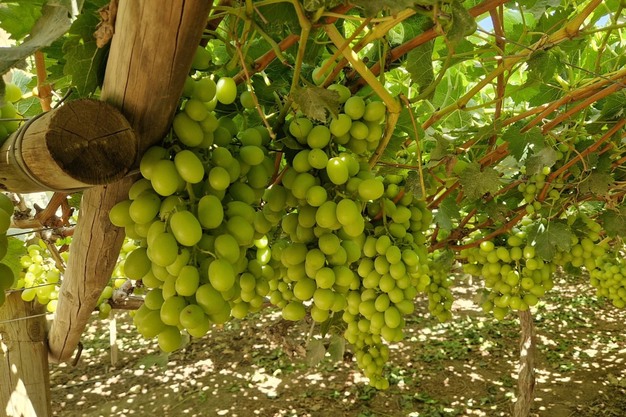
Agrokasa isn't focusing on a single product, but has diversified its product range. In total, it has more than 3,000 hectares cultivated, distributed between Ica and Barranca. "We work with varieties selected for their high quality and international demand," says Administration Manager José Briceño Escajadillo. "In the case of table grapes, all the varieties are patented and seedless. The range includes the Ivory, Sweet Globe, Timpson, and Autumncrisp (green grapes), as well as Jack's Salute, Sweet Celebration, and Ruby Rush (red grapes). These are mainly intended for Europe and the United States."
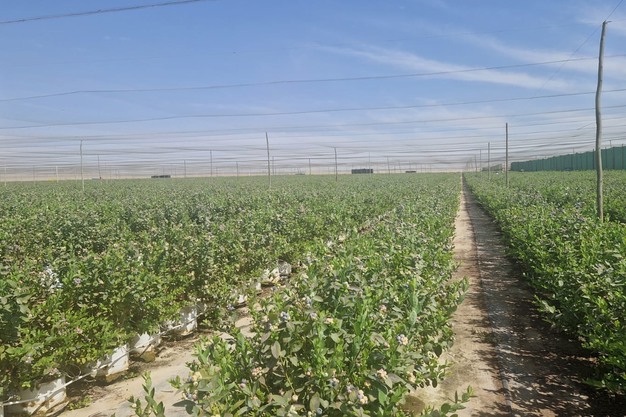
Blueberries, on the other hand, are grown exclusively in pots. "This allows us to better control the development of the plants and optimize the use of water and nutrients," says Engineering and Maintenance Manager Fernando Escurra Ascorra. The varieties grown are the Ventura, AtlasBlue, and Sekoya Pop, as well as the Magica and Eureka.
 © FreshPlaza
Blueberries are grown exclusively in pots.
As for avocados, Agrokasa produces the Hass variety in both Ica and Barranca. Ica's dry climate is ideal for obtaining a high-quality production, while in Barranca, the greater availability of river water allows the production to be staggered, which in turn makes it possible to cover different export windows. This strategy allows harvesting to begin in Barranca in May and continue in Ica between June and July, with the season lasting until September.
Europe is the main destination for Agrokasa's avocados, as it accounts for 70% of the volume exported. The United States has a smaller share (15%) due to strong competition with Mexican avocados. Asia's share has been reduced (currently stands at around 10%) due to the growth of local production in countries such as China and Vietnam. In addition, smaller volumes are exported to Chile (5%), the Middle East, and other South American countries, so the firm has a consolidated and diversified presence in international markets.
As for asparagus, Agrokasa had temporarily abandoned the crop due to the drop in profitability and the impossibility of replanting in exhausted soils. However, with the recent decrease in supply in Peru and Mexico, they plan to resume the activity in 2026, with 600 hectares planted in unused lands in Pisco. "We will start with 300 hectares that year, and another 300 the following year," says Miguel Anchante, Operations Manager of Agrokasa Ica.
Last season, Agrokasa exported approximately 37,000 tons of avocados, 26,000 tons of table grapes, 5,500 tons of blueberries, and 1,400 tons of asparagus.
 © FreshPlaza
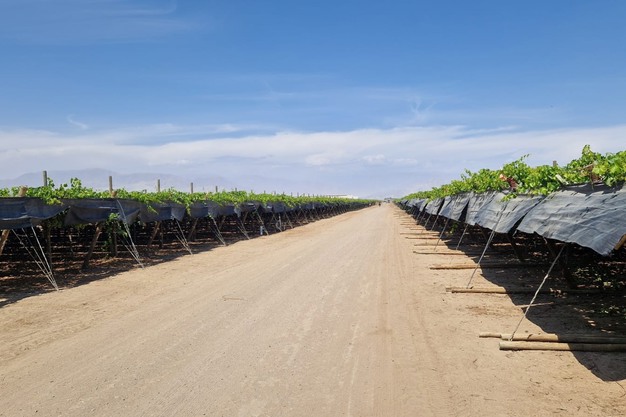
Agrokasa grows table grapes on more than 600 hectares. Grapes are harvested from week 43 to week 4.
Water in the desert: engineering and sustainability
One of Agrokasa's most outstanding achievements is its water management in the three areas where it grows its crops. "Without water, there is no agriculture, and in Ica, water has to be sought out," says Escurra. Currently, the company obtains it from three sources: underground wells (50%), treated wastewater from the plant in the city of Ica (44%), and river water during the rainy season (6%).
To be able to use treated wastewater, Agrokasa invested more than $25 million in infrastructure. "It was a big gamble, but a necessary one," says Briceño. "This combination of different sources allows us to maintain Ica's acreage without sustainability being compromised. In Barranca and Pisco, the company continues to expand with the same efficient water management, using river and groundwater. Drip irrigation is the norm in all our farms. Every drop counts, and they must go exactly where you need them.
Although solar energy hasn't been introduced on a larger scale, they are interested. "Energy in Peru, which comes largely from hydropower, is still competitively-priced, which makes the switch to photovoltaics a less urgent issue," says Escurra. However, they are not ruling it out for the future.
 © FreshPlaza
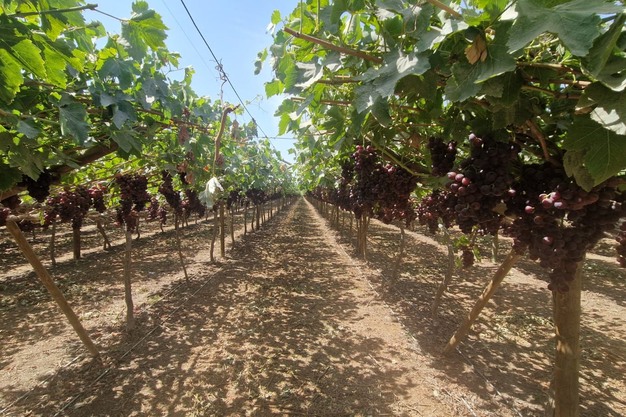
Tawny grapes yield up to 32 tons or 4,000 boxes per hectare and are mainly shipped to Europe and the UK. Agrokasa has planted 82 hectares of this South African variety to replace the less productive Flame. Tawny grapes are harvested in two weeks in three harvesting rounds.
Pests, biodiversity, and biological control
When it comes to pest management, Agrokasa is committed to sustainable methods. They have largely replaced the use of agrochemicals with biological and technological solutions. "We use trained hawks to scare birds away from crops such as grapes and blueberries, and, due to the growth of new areas, we are also having bird netting installed," says Anchante.
They are also releasing beneficial insects such as lacewings and nematodes, bred in their own laboratories in Ica and Barranca. "These help in the control of pests such as aphids, whiteflies, lepidopteran larvae, coleoptera, mealybugs, etc. Other pests such as thrips and whiteflies are also kept under control using chromatic traps," they say.
 © FreshPlaza
The book Aves del desierto (Birds of the desert) is the result of research by ornithologist Víctor Pulido Capurro.
Crop protection goes hand in hand with environmental protection. Agrokasa has promoted conservation projects such as the book Aves del desierto (Birds of the Desert), the result of research by ornithologist Víctor Pulido. "We wanted to check whether biodiversity was affected by agricultural development, and we found that many species not only survive, but also adapt," says Briceño. The company has created preservation zones within its farms, where natural ecosystems and even archaeological remains are preserved.
People: labor and decent conditions
During the high season, from August to January, when both table grapes and blueberries are harvested, up to 10,000 people are employed by Agrokasa. In the low season, only around 3,000 workers are employed. Since the local Ica population doesn't fully meet the demand for labor, the company has built accommodation for 480 people in the Ica fields.
 © FreshPlaza
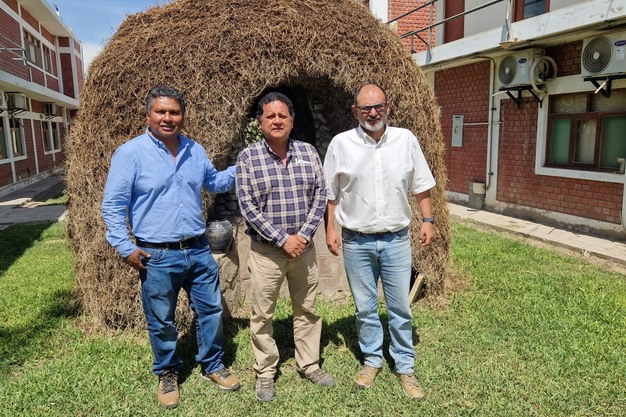
Miguel Anchante (Operations Manager), Fernando Escurra Ascorra (Engineering and Maintenance Manager), and José Briceño Escajadillo (Administration Manager).
"Our commitment is not only to production, but also to people," says Anchante. "This implies providing safe and dignified working conditions, but also having and maintaining a respectful relationship with the communities where they operate. The social responsibility approach is at the core of this company, which was founded in 1995 and is now part of the Hame Group."
 © FreshPlaza
Constant renewal and long-term vision
Agrokasa has a clear policy of maintaining its current table grape, blueberry, and avocado crops and replacing the plants at the end of their useful life with the same species. In the case of avocados, for example, trees that are more than 20 years old are thoroughly pruned, as this allows their useful life to be extended for another 15 to 20 years. "It's a process that requires patience, because after pruning, you have to wait two years before the trees become productive again," says Escurra.
"In addition to seeking productivity and efficiency, we are always considering how to make agriculture viable in the long term," says Briceño.

For more information:
Agrokasa
Panamericana Sur km. 311
Santiago, Ica, Peru
[email protected]
https://agrokasa.com/