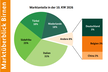
The latest agricultural performance indicator evaluates three components: Business, production, and market. The business component tracks the evolution of producer prices and input costs, the production component measures cultivated area and output, and the market component monitors exports, imports, and domestic consumption.
Among the fruit and vegetable sectors, potatoes, vegetables, pears, and apples showed declines. The downturn is mainly attributed to lower producer prices compared with inflation and increased production costs, reducing margins.
Vegetable producers have seen weakened profitability as prices lag behind inflation while input and logistics costs continue to rise. For fruit producers, particularly in pears and apples, the indicator highlights early signs of decline. Despite maintaining high production volumes and a 51% increase in exports, the price paid to growers fell 10% month-on-month and increased only 2% year-on-year. The gap between revenue and rising expenses, along with higher imports, has pushed the sector from stable to declining performance.
In contrast, sweet citrus fruits and other fruit crops such as cassava and peanuts (grown primarily for vegetable oil and snack industries) remain stable, showing neither marked improvements nor declines across business, production, or market components.
Foreign trade trends
Between January and September 2025, Argentina's fruit and vegetable sectors recorded export earnings of approximately US$4 billion, representing about 15% of total agricultural and livestock exports. This reflects an improvement compared with the 10-year average, though trade remains concentrated in a few products, mainly citrus, apples, pears, and fresh vegetables.
During the same period, imports totaled about US$250 million, mainly consisting of fruits and vegetables sourced to meet off-season demand and supply gaps.
The data show that while fruit and vegetable exports have expanded, profitability within several key crops remains under pressure from rising production costs and slower price growth, particularly in the domestic market.
Source: Coninagro / Argenpapa