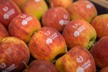
Stable production volumes remain a prerequisite for expanding Korea's agricultural exports. Even with strong demand and developed sales channels, a lack of domestic production limits export capacity. Pears, along with strawberries, are regarded as premium Korean fruit in overseas markets. Buyers often request larger volumes, saying, "We can sell as much as you send us, so just secure enough volume."
Last spring's cold snap caused frost damage, sharply reducing the autumn pear harvest and limiting exports. "A major U.S. buyer even requested, 'We can absorb as much volume as you can send, so please send as much as possible,' showing strong demand, but last year the harvest was poor and we lacked volume to ship," said Kim Gil-dong, CEO of Korea Pear Export Union Co., during the FFA in Sydney, Australia.
According to Korea Customs Service data, pear exports in 2024 totalled US$58.83 million, down 21% from 2023, marking the lowest level since 2015. Export volume fell 31.7% year-on-year to 16,679 tons, the first time since 2013 that exports failed to exceed 20,000 tons. Frost, sunburn, and cracking affected quality, and higher domestic prices reduced export availability. Stocks ran out before year-end.
Exports to Australia also dropped sharply, reaching only 48,000 tons in 2024 compared to 82,000 tons in 2023.
This year's harvest is expected to return to normal levels. The Korea Rural Economic Institute (KREI) projects 2025 pear production at 203,000 tons, up 13.6% from 2024. The cultivation area totals 9,361 hectares, 0.6% lower year-on-year, while yield per 10 ares is expected to rise 14.3% to 2,166 kilograms (21.66 tons per hectare). Production is forecast to be 6.2% higher than the average year.
Due to spring cold and heat waves, the share of misshapen pears is expected to rise. "Size and shape are weaker than last year, but the sugar content is good," said a KREI official. Shingo pear arrivals in local markets increased 14.5% year-on-year, with wholesale prices at about US$29.10 per 15 kilograms, down 21.4% from 2024.
Frequent rainfall during harvest has caused blemishes and may reduce storage potential. "During the heat wave, spider mites and scale insects occurred more than last year. Farms that were lax in control may see a lot of decay during distribution and storage," a KREI official said.
Growers are expected to ship early, turning to exports to absorb supply. The Rural Development Administration (RDA) recommends adjusting harvest timing to mitigate heat damage. In the long term, the RDA is promoting new heat- and disease-tolerant varieties such as Manhwang, which can store for over seven months under cold storage.
"With more than 50% of our pear exports concentrated in the United States, the U.S. tariff barrier is also a challenge to overcome," said Kim. "We need to develop diverse markets, including Australia, Vietnam, Taiwan, and Europe."
Source: ChosunBiz