Blueberry supply from Peru is picking up. "While Peru's volumes were slow to start, production has since accelerated and the country is the current dominator of global supply," says Sarah Consalo, chief financial officer and global partnerships officer of Consalo Family Farms. "Current export levels are roughly 25 percent higher than last year, signaling a strong rebound from the previous season."
However the supply from Peru has been inconsistent. "The output has varied noticeably between growing regions and varieties. Some areas experienced strong yields and good sizing, while others faced uneven fruit sets and lower pack-outs," she says, adding that this regional inconsistency has led to an unpredictable flow of fruit into the U.S. pipeline, occasionally tightening availability week-to-week despite overall high volumes. "Combined with ongoing logistics and port delays, the result has been an unsure supply picture that is uneven in execution across the market."
Overall, the global blueberry supply is substantially higher now over October 2024, largely due to Peru's record rebound after a challenging previous season. Still, the recovery has been irregular, as varying regional performance and weather disruptions have created a more erratic flow of fruit into key markets, particularly the U.S.
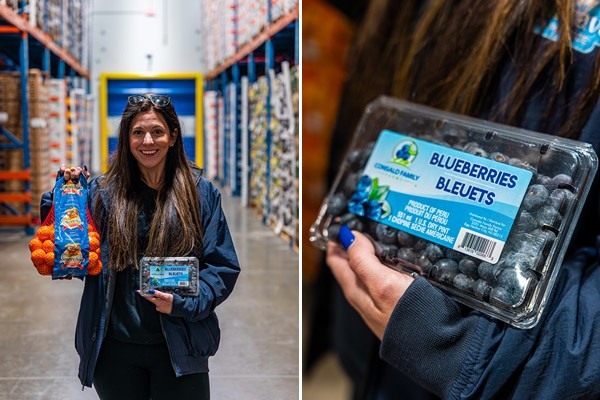 © Consalo Family FarmsConsalo says that global production of blueberries is up overall, but a mix of weather events and high logistics costs is affecting pricing and supply consistency across different regions.
Late start, high volume
In terms of timing, for Peru, the blueberry season in 2024–2025 started late but ultimately produced these record high volumes overall in the fields. "However, those volumes aren't fully translating into consistent arrivals in the U.S. market," she says. "New varieties and genetics didn't perform during the harvest process so the season is moving slowly."
In fact, the blueberry market generally is facing significant challenges tied to varietal performance and genetics. Consalo says the differences in plant material are leading to inconsistent yields, fruit size, and quality across growing regions. "Some of the newer genetics have underperformed this season, while older varieties are struggling to maintain competitiveness in terms of firmness and shelf life," she says, noting that these disparities are adding complexity to sourcing and creating uneven supply patterns in the market.
Meanwhile, Mexico's 2025 blueberry season was intentionally delayed as growers adjusted planting and harvest schedules to better align with shifting market conditions and competitive pressures. "Both origins continue to refine their strategies as they navigate weather-related challenges and fluctuating demand across key export destinations," she says.
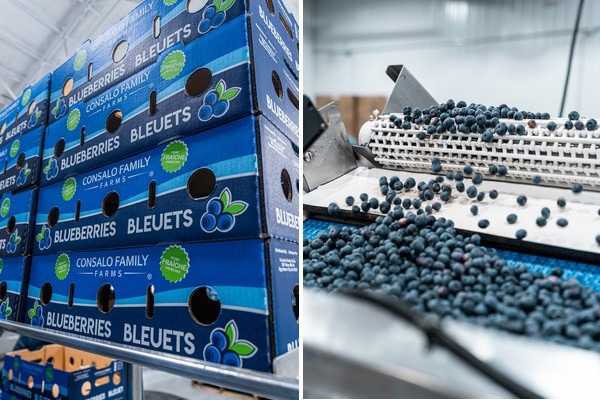 © Consalo Family FarmsAdditional developments are also showing that the blueberry market is experiencing a global reshuffle in sourcing and strategy.
Blueberry demand still growing
As for the demand for blueberries, it remains consistently strong and continues to grow, thanks to factors such as health awareness and year-round availability. While Peru's overall production potential remains high, the market is not experiencing the smooth, abundant supply that early forecasts suggested. "Weather-related inconsistency, variable pack-outs, and port delays have tightened short-term availability and created the impression of limited fruit. As a result, even with a larger crop on paper, U.S. buyers are seeing temporary gaps in arrivals leading to a market that feels tighter than expected," says Consalo.
That said, the consumption of blueberries generally is expected to continue to climb, though growth may feel more gradual in the near term as the market adjusts to higher Peruvian volumes. Retail movement remains consistent, supported by strong consumer awareness and health-focused demand, but the pace of consumption has not fully kept up with the surge in supply. "As logistics improve and pricing stabilizes, demand should normalize through early 2026. Long-term fundamentals remain positive, with the category firmly established as a year-round staple and ongoing promotions helping sustain consumption across key markets," adds Consalo.
As for pricing, it has softened compared to both last year and just a few weeks ago even, reflecting the volumes from Peru and the slower market absorption. "Though demand remains steady, the market is adjusting to abundant fruit and longer transit times which continue to influence weekly pricing trends," says Consalo.
Concerns for blueberry growers/shippers
Meanwhile, the category as a whole is seeing changes. This includes a global reshuffle in sourcing and strategy, with a heavy emphasis on quality, technology, and market diversification. Record production volumes in 2024 have set the stage for continued high supply and competitive pricing, pushing producers to innovate. Adding to that shuffle are continued challenges in the areas of tariffs, inflation, rising costs, and labor shortages which are still pressuring grower margins, while climate variability remains a persistent concern affecting long-term yield stability.
Looking ahead, in the next few weeks the blueberry market is expected to remain under some pressure as incoming product from Peru continue to increase. "Supply is temporarily tight due to port delays but arrivals are projected to pick up significantly in early November as shipments reach the U.S. market," says Consalo. "Chile's season is also gaining momentum, while Mexico's intentionally delayed season is just beginning to add light volumes to overall availability."
 For more information:
Sarah Consalo
Consalo Family Farms
Tel: +1 (856) 794-1408
www.consalofamilyfarms.com