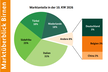
The global blueberry market remains on a steady growth trajectory, according to Simón Andrés Muñoz, a technical advisor at Consultora Agrícola y Comercial Santa María. "In countries like the United States, the average annual per capita consumption is now approximately 3 kilograms. This indicates that blueberries are becoming more established in the global diet," he stated.
The Chinese market has played a crucial role in the sector's recent growth. "It is basically the market that boosted the industry in Peru. In China, per capita consumption has risen by approximately 400% since 2014," Muñoz noted.
 © CASM Blueberries
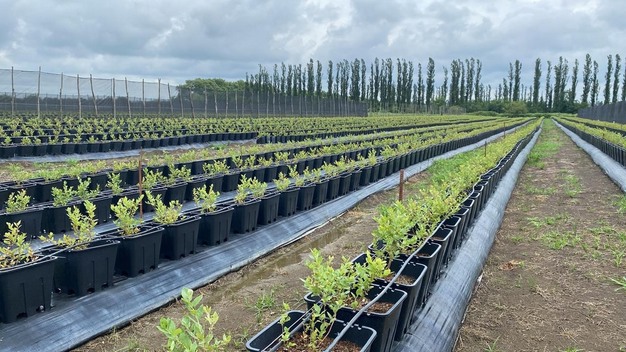
However, the expert warned, this growth also brings with it greater technical and commercial challenges. "Today, simply producing is not enough. It is crucial to select appropriate varieties and clearly identify the target market. For instance, the Rabbit Eye variety might be profitable in New Zealand but may not yield the same results in Europe or Latin America," Muñoz stated.
Peru remains the top producer in South America, with an estimated output of 380,000 to 400,000 tons—about four times higher than Chile's. Meanwhile, Chile's production stays steady at roughly 80,000 to 90,000 tons, though it has been declining in recent years.
 © CASM Blueberries
"The main difference lies in genetics and climate. While Peru produces varieties with low cold-hour requirements, which speeds up returns on investment, Chile relies on traditional varieties with high requirements, resulting in slower development and lower yields," the consultant stated.
Countries like Ecuador and Colombia are beginning to cultivate blueberries, despite the challenges of terrain and altitude. "The highlands provide the perfect climate, but the landscape makes mechanisation difficult. Nevertheless, successful projects are showing promising yields and quality," Muñoz highlighted.
 © CASM Blueberries
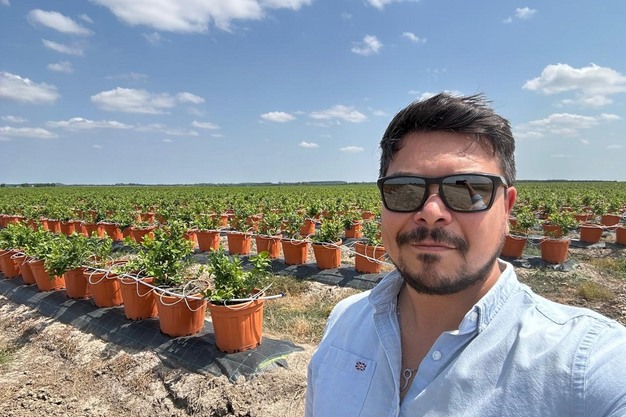
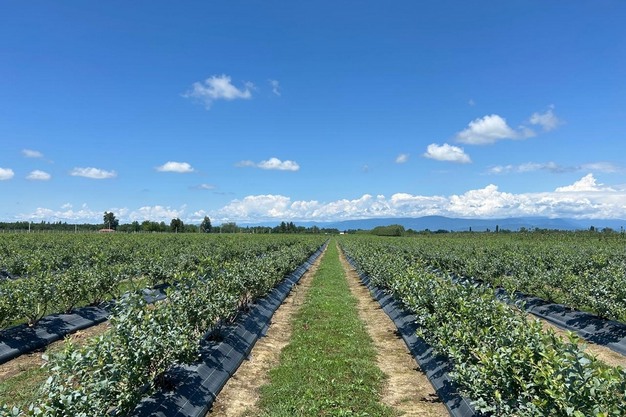
One of the major recent changes in agricultural management is the shift from planting directly in soil to growing in substrate or pots. This change enables more precise control over fertigation, drainage, and temperature. "This method is being replicated even in areas where the soil is suitable, because it provides greater control and productive stability," he said.
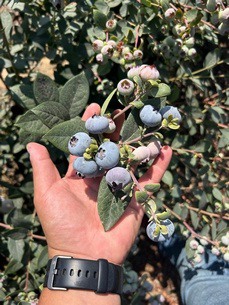
Muñoz also emphasized the role of modern genetics in developing new varieties suited to subtropical climates. "Programs such as OzBlu, Sekoya (Fallcreek), and MBO have enabled countries with limited cold hours to participate in global production. In Chile, we are also observing a rise in the area planted with premium Sekoya varieties, especially those with medium and high chilling hour requirements, which strengthens the focus on quality and differentiation."
 © CASM Blueberries
Despite the expansion and supply adjustments, the specialist believes that the future of blueberries remains promising. "It is a dynamic industry, which will continue to grow, but which requires more and more technical knowledge and commercial planning. The winning strategy is not in producing more, but in producing better," he concluded.
 © CASM Blueberries For more information:
Simón Andrés Muñoz
Consultora Agrícola y Comercial Santa María
Chile
Tel.: +56 9 40247672
Email: [email protected]
www.casmblueberries.com