India's apple trade will be undergoing a seasonal pivot, shifting from a reliance on imported fruit to the arrival of fresh harvests from Himachal Pradesh and Jammu & Kashmir, says Santosh Chauhan of Chauhan EXIM, a local fresh fruit importer-exporter. "During the transition, imported apples will continue to play a crucial role in meeting demand before local volumes peak," he explains.
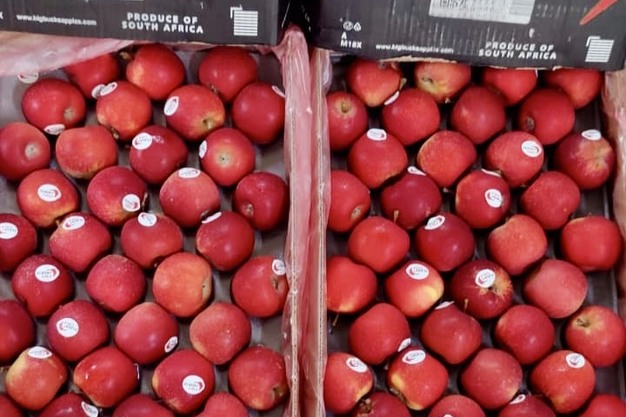
According to Chauhan, imported apples hold a strong position in the premium and urban segments thanks to their uniformity, crispness, and packaging quality: "Quality differences are clear, with imported apples offering better consistency and shelf-life than their domestic counterparts," Chauhan notes. "Key suppliers from the northern hemisphere include Iran, Turkey, and, until late 2024, Poland, which saw reduced Gala shipments due to crop issues. From mid‑2025, Royal Gala apples from New Zealand became fast-sellers in metros, signaling a consumer shift toward this variety. Other southern hemisphere suppliers, including from Chile and Brazil, stay essential for bridging supply gaps when northern hemisphere volumes decrease," he adds.
 © Chauhan EXIM
Chauhan shares his emerging sourcing priorities from the United States, despite higher landed costs. "US-origin apples appeal to affluent buyers, but tariff cuts or trade agreements would be key to competitiveness," he states. "Currently, the import duty is USD 0.6 per kg, with landed costs averaging USD 0.8 per kg for Turkey, USD 0.7 per kg for Iran, and USD 1 per kg for premium USA origins."
Chauhan highlights this year's domestic output forecast at 2.55 million MT, up 6% from last year, thanks to favorable weather in Jammu & Kashmir, accounting for 70% of supply, and Himachal Pradesh representing 20%. He mentions popular domestic varieties such as Red Delicious, Golden Delicious, Ambri, McIntosh Red, and Granny Smith.
However, he adds, "Cold-chain and refrigerated transport constraints limit the reach of Indian apples beyond the north, keeping imports relevant for southern and central markets. Which is why demand for high-quality imports remains strong, even alongside rising local production."
 © Chauhan EXIM
"As the transition window runs from mid‑August to late October, we expect early-season Himachali apples to dominate between mid‑August to September, as Kashmiri supply will arrive slightly later due to delayed flowering. From late September to October, peak volumes from Kashmir will hit the market, gradually reducing the need for imports," Chauhan explains
"During this time, northern hemisphere imports from Poland, Iran, and Turkey will taper off, while budget volumes from Iran and Turkey may still serve southern markets. Retailers are expected to clear southern hemisphere stocks from Chile and New Zealand at discounted rates to make way for domestic crops. Premium imports like New Zealand Gala and US Fuji will retain their niche until local volumes fully stabilize," Chauhan concludes.
For more information:
Santosh Chauhan
Chauhan EXIM
Tel: +91 90 76 602 515
Email: [email protected]