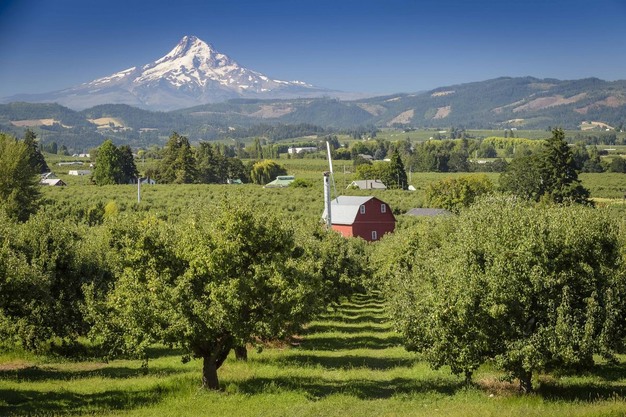
Due to freeze damage, the 2024 Pacific Northwest pear crop dropped to 10.6 million boxes, which was the smallest crop since the mid-1980s. Fortunately, the outlook for this year's pear crop is much more promising. "After a year of better weather in the growing districts, the 2025 northwest crop is expected to round back to the normal production ranges of the past ten seasons," says Jeff Correa with USA Pears. In addition to favorable weather conditions this past winter and spring, summer temperatures have been ideal for a much-improved pear crop. Although the crop estimate hasn't been finalized yet, the industry is expecting a crop around 16.5 million boxes (44 lb. or 20 kg. box equivalents). In terms of quality, it is too early to tell what the manifest will look like. However, the expectation is for a high percentage of U.S. #1 to be available for all markets.
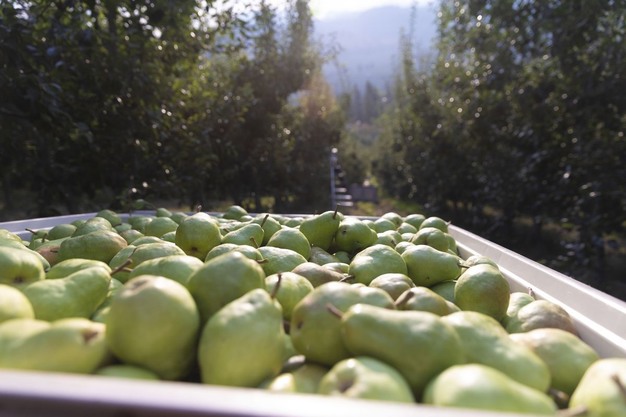
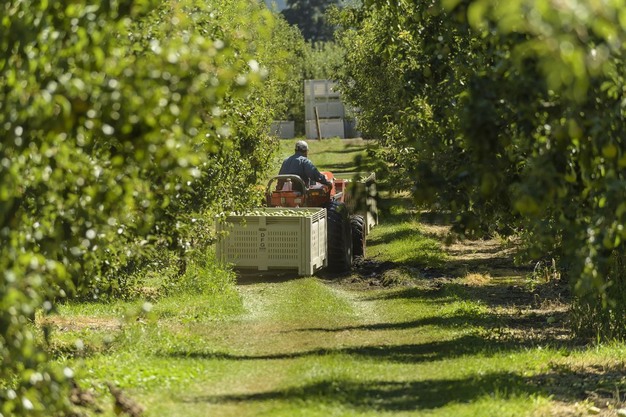
Harvest started in early August with the Starkrimson and Green Bartlett varieties. In late August/early September, the winter pear varieties like Green Anjou, Bosc, Red Anjou, Comice, Seckel, Forelle, etc. will start harvest and the industry expects to complete harvest by late September/early October. Green Anjou, Green Bartlett, Bosc, and Red Anjou are the region's main varieties. "There are some increasing volumes of new varieties for the industry, like Happi and Gem, but those production volumes still remain small," shared Correa.
 © USA Pears
Increased export opportunities
Because U.S. pear volume wasn't able to meet demand last season, southern hemisphere supplying countries, namely Argentina, Chile, and South Africa, have filled the gap in the supply to the U.S.' top markets. In addition to the domestic market, top markets include Mexico and Canada. For this upcoming season, an increased crop size is expected to translate into a better crop manifest for exports, allowing to recapture some of that lost market share in those key offshore export markets and broaden the industry's export portfolio beyond Mexico. "The industry is expected to be more active in many exports where Northwest pears have been sidelined for the past several seasons due to short pear crops, shipping challenges, difficult transit times for pears and the global pandemic," shared Correa. Pear Bureau Northwest will be leaning into the USDA Market Access Program (MAP) grant funds and the Regional Agricultural Promotion Program (RAPP) to help fund the industry's promotional efforts to recapture that lost market share.
 © USA Pears
Cloudy export outlook
Mexico, Canada, and the Central America region will remain the priority markets for the 2025-2026 season. However, with the return to a normal size pear crop, Pear Bureau Northwest will begin the work to help the industry return to normal offshore export volumes. As a result, markets in South America, Asia, and the Middle East are expected to increase their imports of Pacific Northwest pears. Nevertheless, the overall export market outlook is cloudy and full of uncertainty due to the tariff tensions. "This outlook seems to change weekly. From positive news as new trade agreements improve market access to increased challenges if top trading partners decide to place retaliatory tariffs on pears."
 © USA Pears
 For more information:
Jeff Correa
Pear Bureau Northwest
Tel: (+1) 503-652-9720
[email protected]
www.usapears.com