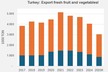
A new report published today warns of serious risks to the UK's fresh food supply if retailers and importers fail to address the growing impact of climate change. In 2024, the UK imported 47% of its vegetables and 84% of its fruit, making it heavily reliant on international growing conditions.
With 2023 recorded as the hottest year ever and 22 July 2024 as the hottest day globally, the report stresses that climate risk is no longer theoretical. Importers must prepare for increasingly common heatwaves, droughts, and flooding in supplier regions. The analysis, conducted by sustainability consultancy Aethr Associates in collaboration with the Fresh Produce Consortium, reveals that 64% of the UK's fruit and vegetable imports come from just ten countries. Temperatures in those countries are projected to rise by an average of 16% by 2050.
Spain, the UK's largest source of fruit and vegetables, is forecasted to see the number of 'hot days' (defined as a 24-hour average temperature above 35°C) rise from nine to 20 per year. Peru is expected to see a 1000% increase in hot days, up from one to eleven annually. By 2050, 72% of produce from the UK's top ten import countries is projected to face extreme water stress, heightening the risk of harvest failures and volatile prices.
The UK's dependency on imported fresh food has grown steadily over the past century, with current annual spending on imports nearing £10 billion. Over the last 30 years, consumption of exotic produce such as avocados, mangoes, and pineapples has increased significantly. Alarmingly, the report highlights that over the past five years, the UK has increased its fruit and vegetable spending by 43% in countries already facing extreme water stress.
"The growing reliance on fresh food imports from regions with limited water resources will lead to more empty shelves and rising food prices, as we've already seen in recent years," said Richard Bonn, Co-Founder of Aethr Associates. "Climate projections over the next 25 years must be taken seriously. Importers need to ensure current crop production methods can withstand the climate of 2050."
The report urges UK importers to assess their exposure to climate risks and collaborate with growers and suppliers on mitigation strategies. These may include improving water storage, managing extreme temperatures, enhancing flood defences, and investing in climate-resilient crop varieties.
Kelly Shields, Technical Director of the Fresh Produce Consortium, added, "This sector is highly adaptable, but it must first understand the scale of the challenge. This report brings the data together to both define the threat and highlight solutions."
To protect the UK's food security, the authors call on businesses and policymakers to embed climate risk into long-term decision-making and adopt standardised methods to evaluate and mitigate supply chain vulnerabilities.
 For more information:
Aethr Associates
www.aethr.co.uk