With the impending Shanghai Cooperation Organisation Summit in North China's Tianjin Municipality, trade and investment between China and Central Asian countries show continuous momentum. Industry participants highlight the enhanced digital connectivity and logistics cooperation that are paving the way for new avenues for entrepreneurs and consumers, according to the Global Times.
In the last few years, trade exchanges between China and the five Central Asian countries have intensified. A key factor in this growth has been the surge in China's trade with these nations, which rose by 13.8 per cent year-on-year, reaching approximately $49.76 billion in the first half of 2025, based on data from the General Administration of Customs as of July 14.
Uzum, a prominent e-commerce company in Uzbekistan, acknowledged the rising presence of Chinese sellers on its platform. The company reports that "products from China now span a wide range of categories, from electronics and household goods to tools and renovation materials," and they are highly sought-after by Uzbek consumers. Uzum further stated that more than half of Uzbekistan's population, over 17 million people, regularly utilize their services every month.
Uzum noted a notable rise in active Chinese sellers this year, with many selecting Uzum as their main gateway into the Uzbek market. "We anticipate this trend to intensify as cross-border trade becomes more accessible and Uzbek consumers continue to prioritize value and variety."
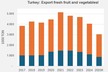
Zhang Sixin, general manager of Xinjiang Zhonghuan Logistics Co., reported a marked increase in the fruit and vegetable trade between China and Central Asian countries. "Chinese fruits and vegetables are now very popular in Central Asian markets," Zhang mentioned, citing improved shipments and transport capacities as a result of enhanced trade facilitation measures and a better business environment in recent years.
Key Chinese agricultural products such as cherry tomatoes, grapes, dragon fruit, and kiwifruit find favor in these markets, benefiting from the strong complementarity between trading partners. Goods are efficiently distributed across the region once collectively declared for customs in Almaty, Kazakhstan.
Analysts highlight the importance of multilateralism and cooperative economic and trade relations amidst global trade challenges. Chinese regions report growth in trade and economic engagements with Central Asia. For instance, trade between Shandong Province and Central Asian countries increased by 36.4 per cent in the first half of 2025, spanning sectors like modern agriculture and green mining.
Northwest China's Xinjiang Uygur Autonomous Region also saw its agricultural exports to the five Central Asian nations rise by 100.1 per cent to about $610 million in the first five months of 2025. Trade with these nations constituted 49.5 per cent of Xinjiang's total trade during this period.
Source: Global Times