The new season of Peruvian blueberries has arrived on the market. Currently, the available brands and quantities are relatively limited, with the main variety being Sekoya Pop, available in sizes 14mm+ and 18mm+. Due to the current consumption environment and the quantity and pricing of domestically grown Chinese blueberries, the price of newly arrived Peruvian blueberries is lower than during the same period last year, especially for the 14mm+ specification. The price gap between the two sizes is also wider than in the past, with 14mm+ blueberries selling for approximately $8.25–$9.60 per box, less than the 18mm+ size. Some traders noted that the current price of Chinese blueberries is relatively low. Yunnan blueberries are priced around $10.30–$11.70 per box due to limited supply, while blueberries from other domestic regions are selling for $4.10–$5.50 per box, impacting the pricing of imported blueberries.

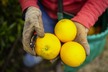
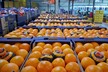
Left: South African mandarins; Right: Peruvian blueberries
This week saw a surge in imported mandarin arrivals, pushing overall mandarin prices down. South African Nova mandarins arrived in large volumes, with prices falling from $23.40–$24.80 to $17.90–$19.20 per box. Although South African Nadorcott mandarins arrived in smaller quantities, the market was still affected, with current prices at about $23.40–$24.80 per box, roughly 20% lower than the same period in previous years. Peruvian mandarins have been most affected by the concentrated arrivals. Their own supply has also increased, with prices now at $9.60–$11.00 per box, a 40–45% drop. According to traders, the quality and taste of these mandarins remain stable, but the large volumes combined with low consumer demand have brought prices down.
South African sour oranges have also arrived, with current prices and quality levels consistent with past years at around $23.40–$24.80 per box. Regarding South African sweet oranges, some traders mentioned that the taste and quality of certain batches are subpar, leading to lower prices. In contrast, the price of South African grapefruit remains steady at $19.20–$20.50 per box, with traders citing limited arrival volumes as the key reason for price stability.

Left: New Zealand Queen apples; Right: South African sour oranges
In the apple market, New Zealand Gala apples are experiencing smooth sales and stable pricing, due to limited arrivals and strong market demand this year. Current selling prices are around $42.70–$44.10 per box, higher than in previous years. However, sales and prices for Queen apples have not been as favorable. In past years, Queen apples were priced significantly higher than Gala apples at around $55.00–$68.50 per box, but now their prices are comparable to Gala apples, with some larger fruits selling for under $41.00 per box. Traders said that while the quality and flavor of Queen apples remain good, the larger volume of arrivals this year has coincided with a drop in market demand.
Prices of Washington cherries from the United States have also declined. The 9.5R specification is currently sold for about $41.00–$55.00 per box, while the 10R specification is priced below $41.00, which is significantly lower than in previous years. Traders attribute this to reduced consumer demand.
 Left: Washington cherries from the United States; Right: Peruvian avocados
The average price of Peruvian avocados is about $10.30 per box. According to traders, this price level has remained stable for roughly a month. Most avocados currently on sale are from existing inventory, and with limited remaining stock, traders expect new shipments to arrive soon, which may drive prices up. Some earlier inventory is still being sold at $6.90 per box or lower.
Imports of coconuts have slowed recently, with arrivals lower than during the same period last year. However, prices have remained steady. Thai young coconuts are currently sold at about $8.90 per box.
The durian market continues to perform weakly. Traders report that both arrival and sales volumes are limited, and a price rebound is unlikely in the short term. Currently, Thai durian dominates the market.