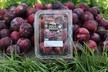
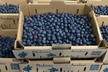
The arrival of the first crates of red currants and blackberries heralds the start of the summer season at HANOS. "Seasonal products deserve more attention," begins Henk Verwoert, fruit and vegetable buyer at this Dutch hospitality wholesaler. "We're using these fruits to refocus the spotlight on those products. We can, thus, keep standing out and offer our customers gorgeous products. There's plenty of interest in this early fruit. We want to have it on offer as soon as it's available. We're proud to be the first to deliver it."
 © HANOS
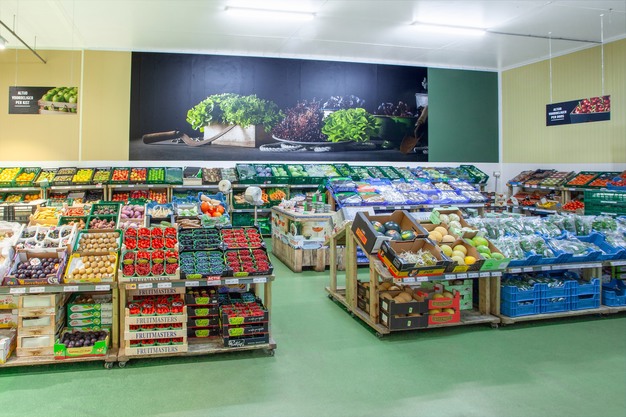
HANOS offers an extensive range of summer fruits, featuring familiar berries alongside many smaller niche products. "We stock everything, including niche products, including raspberries, pineapple, strawberries, white cherries, gooseberries, and kiwi berries," says Henk. He notes that some of these products, such as yellow raspberries or black and white currants, have very short seasons, which require good coordination.
Information exchange
"We exchange plenty of information with the growers, so we know when we can expect the first crop. We can do a lot with our large network." They also communicate with customers. "For example, we tell chefs in advance about the range so they can consider that when compiling their menus," Henk explains.
Besides blueberries, red currants, and strawberries, available year-round, the summer season is in full swing between March and September, Henk says. "Flavor and value for money are important to us when it comes to those fruits: good, tasty, and firm fruit is a must."
Prefer Dutch products
HANOS prefers to source their products as close to home as possible, Verwoert adds. "From a sustainability perspective, which our clients deem important, too, we focus as much as possible on locally grown fruit. I prefer having Dutch products all year round, but that's not possible for all categories. We, for instance, have Dutch strawberries all year round."
"Redcurrants and blackberries come from the Netherlands in the winter season after long storage. The only gap in our supply is between mid-October and mid-April, when local raspberries aren't available," Henk continues. Portugal steps in to bridge that gap. "We're working on extending the Dutch season with the same varieties from there, so we can offer the same raspberries all year round."
 © HANOS
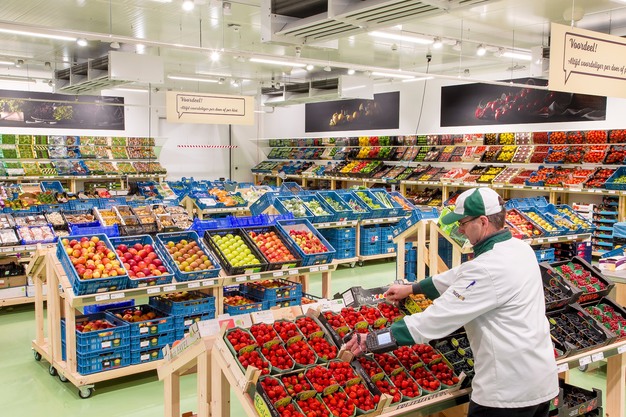
Henk has seen an increase in, say, blueberry sales lately, but adds that the soft fruit category does not generally generate large sales volumes in the hospitality wholesale sector. "Those buyers mostly use summer fruit as a garnish for things like desserts and cakes, which doesn't boost volume," he says. Nevertheless, by putting together mixes, HANOS encourages customers to buy more soft fruit and try other products. "We have a mix of red, white, and blueberries, our Dutch berry mix, and a soft fruit mix that we sell in triple packs. That gives clients a variety of products with which to work within a single package."
Efforts and investment in good products
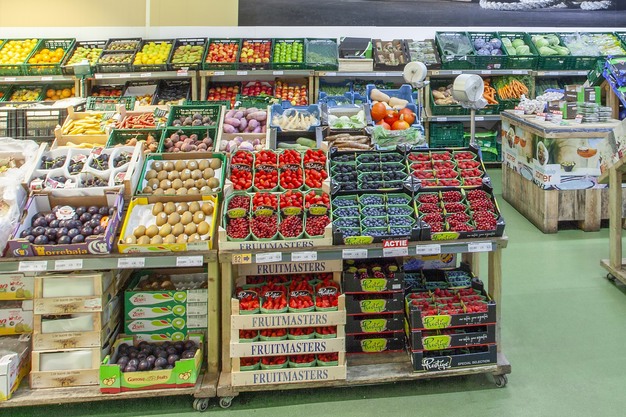
What is soft fruit's biggest challenge? Offering consistent quality with good flavor, Henk answers: "We try to have the same varieties all year round. That's what our buyers want. We distinguish ourselves through flavor and quality. That demands a lot from our growers and requires plenty of knowledge."
That is undoubtedly true since growers face climate challenges and are feeling the impact of the declining range of crop protection products. "Excessive heat or rain can, for example, cause misshapen or damaged fruit, and pests like Suzuki flies also play a role. These are real threats to soft fruit cultivation. Growers have to increase their efforts and investments to deliver good products."
 © HANOS
Improved varieties
The buyer believes bargain prices are hindering the demand for tasty summer fruit, too. He points out that products sold at bargain prices have a different quality and flavor profile. "If the first blackberry you eat is sour, you won't eat many more in the future. That means young people don't get to know how they really taste, even though they're our potential future customers," Henk adds.
"Fruit must be tasty." Henk, nonetheless, remains hopeful about developments in this area. "Improved varieties, with longer shelf lives, too, are constantly being developed. Something like the new Bestum blackberry variety tastes super-sweet and melts in your mouth. The hospitality industry will always have room for that type of quality fruit," he concludes.
For more information HANOS
HANOS
[email protected]
www.hanos.nll