In India, apples demand precise grading, sorting, and packing to meet the diverse needs of quick commerce, modern retail, and HoReCa. Rohit Khetan of Produpak Agro emphasizes: "India's not a one-size-fits-all market. Flexibility in pack sizes and grades is key."
Based on his experience with importing and in-market distribution of fresh produce, he shares that retailers and quick commerce companies prioritize consistent quality in the form of uniform size, vibrant color, firmness, and optimal sweetness alongside competitive pricing for India's price-sensitive consumers. Khetan further notes: "Compliance with FSSAI regulations, barcoding, and pre-labeled packs is increasingly critical, especially as standards tighten. Reliable supply and predictable lead times are essential to avoid disruptions in these fast-paced channels, where delays erode business," he adds, while mentioning that partnerships with distributors who understand local dynamics can help with ensuring SKU readiness and delivery consistency.
 © Produpak Agro
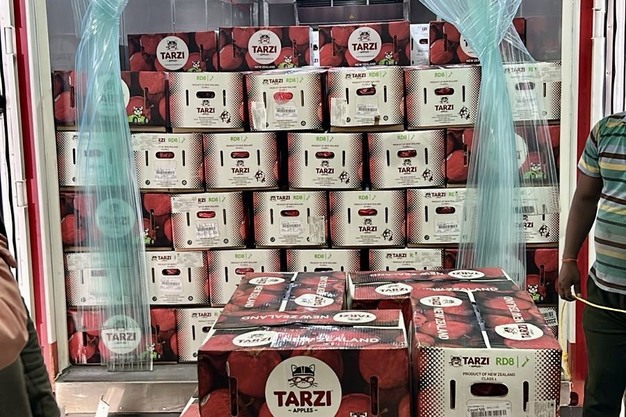
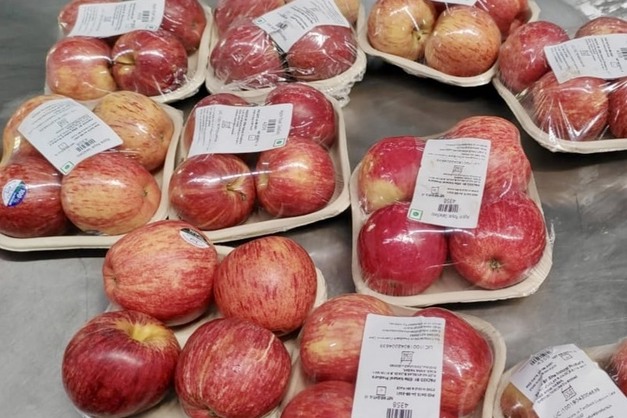
According to Khetan, commercial value is often diminished due to cold-chain lapses that cause softness or bruising. "Many importers also struggle with size mismatches, especially in quick commerce, where pack sizes are strictly defined. We address these hurdles through localized sorting and creating tailored SKUs in the form of blemish-free 2-, 4-, or 6-piece packs for quick commerce, premium sizes for retail, and mid-tier grades for HoReCa," Khetan explains. "Using calibrated tools to measure size, sweetness, and firmness, trained professionals align inventory with channel requirements. Through our exploration of AI-based grading, we also aim to enhance accuracy, ensuring scalability without compromising quality," he adds.
In terms of demand, Khetan observes varying patterns across institutions: "HoReCa seeks bulk, price-sensitive apples, accepting mid-tier cosmetic grades if eating or juicing quality is maintained. Modern retail favors large, shiny apples for visual appeal, often in branded packs with extended shelf life. Quick commerce requires mid-sized, blemish-free apples in compact packs, emphasizing logistics precision," Khetan says. Post-arrival, his company sorts inventory based on channel mapping to maximize value and reduce wastage while meeting each segment's unique specifications.
 © Produpak Agro
Khetan further points to low consumer awareness of apple varieties outside Tier-1 cities: "Purchase is driven by color, size, and price, not variety, leading to mismatched expectations. Shiny red apples assumed to be sweet may turn out tart, lowering repeat rates," Khetan notes and highlights the need for educating B2B buyers on variety selection and recommending SKU combinations based on consumer feedback to help global exporters align with Indian taste preferences.
"For exporters to India, flexibility in pack sizes and grades is critical, as is partnering with local experts offering market intelligence, post-import quality control, and last-mile distribution," Khetan advises. "Apples may be globally traded, but India's consumption habits are deeply local. Tailored solutions and continuous market learning are essential to unlock India's growing apple market," he concludes.
For more information:
Rohit Khetan
Produpak Agro Pvt. Ltd.
Tel: +91 91 50 018 931
Email: [email protected]
www.produpak.com