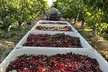
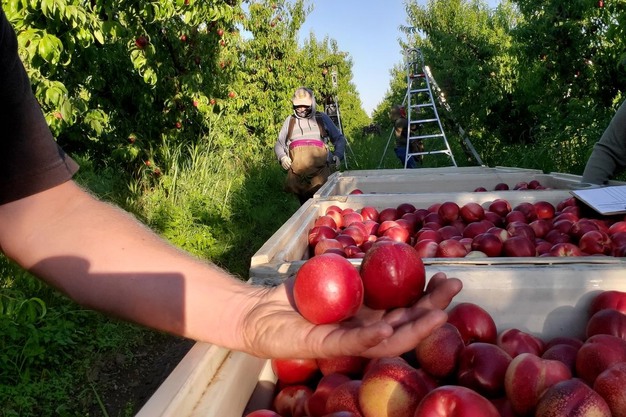
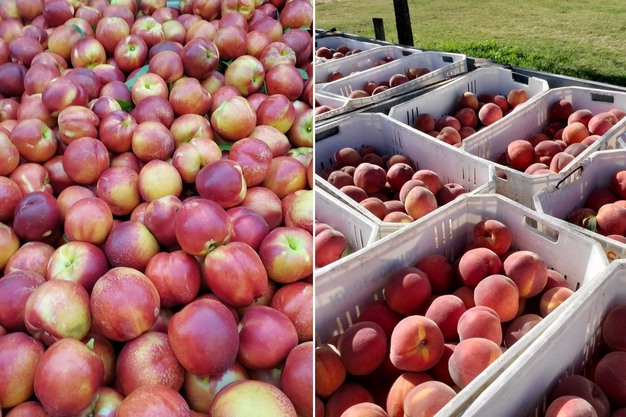
California is experiencing an optimal stone fruit season so far. "Up until now, temperatures have been very mild, and it has been below average cool," says Magnus Olson with Olson Family Farms, an organic grower of different stone fruit varieties. "Dry weather and temperatures in the mid-80s to low 90s are just better for the fruit. They give the fruit a chance to size up before ripening." While the season is at its peak, pricing is still holding in the mid to low $30s for a 16 lb. box so far.
Water supply
These ideal summer conditions followed plentiful precipitation during winter. "As a result, water supply is at 80 percent of a full year," shared Olson. "This is very beneficial as it allows us to use surface water for irrigation rather than having to pump." Surface water is the least expensive option for growers as the electricity bills from pumping quickly add up. With the current water levels in the lake, Olson is expecting to use surface water for the large majority of the season. "We may have to supplement with pumping occasionally but nothing like a couple of years ago when allocation was zero."
 © Olson Family Farms
Improved availability of labor
In addition to water, labor has also been a challenge for many years. However, the situation has been improving in the last two years. "More labor is available due to a transition of crops. Labor has been one of the largest input costs and in combination with the challenge to find it, many growers have made the decision to switch to less labor-intensive crops over the years," said Olson. Crops like stone fruit are increasingly being replaced by less-labor intensive crops such as nuts, raisins, citrus, and blueberries that can be mechanically harvested. In addition, due to more moderate temperatures this season, there hasn't been as much of a rush to get the fruit off the trees, which also helps with availability of labor. While Olson Family Farms continues to grow organic stone fruit, recently more persimmons were put in to diversify.
 © Olson Family Farms
Since the 1980s, the company has been committed to growing organic fruit only. "We've always noticed that the more conventional fruit is being grown, the less habitat there is for insects and bugs. It's very concerning that pollinator habitats are in decline, and it's our goal to contribute to creating an optimal environment for them."
 For more information:
Magnus Olson
Olson Family Farms
Tel: (+1) 559-393-7225
www.olsonfamilyfarms.com