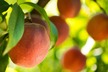
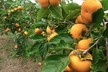
The apricot yield in Europe is expected to be low, a trend seen in Hungary as well. However, an area around Lake Balaton presents an anomaly, benefiting from its unique microclimatic conditions. Specifically, plantations located on the southern shore have been shielded from frosts, as reported by Miklós Gara, managing director of Boglár Kertész Kft. This is attributed to the area's elevation relative to the water level and the moderating influence of the lake's temperature. April's early morning cold snaps were mitigated by Lake Balaton's temperatures, allowing apricots to survive and be harvested.
Gara notes a disparity in crop conditions, with production units above the lake level faring better than those below. Their enterprise processes apricots from their 100-200 hectares for both fresh and industrial markets. The yield varies with apricot varieties; early-flowering types withstand temperatures of minus 4-5 degrees, while even a minimal drop to minus half a degree impacts others. As a result, early-ripening varieties have yielded average crops, mid-ripening varieties show slightly better outcomes, and later-ripening varieties, expected to be harvested in early July, are anticipated to provide a typical yield. This places them in a relatively better position compared to other producers.
The firm demand for apricots endures, supported by both domestic and international markets. Apricots maintain cultural significance in Hungary, with uses ranging from jam making to the production of pálinka. As Miklós Gara mentions, interest in homemade jam remains robust, delineated from larger-scale canning industry applications.
The current season has raised interest in pricing dynamics, complicated by European crop failures. Gara points out that though demand was predicted to affect prices adversely, the current figures are slightly lower than those two years prior. Despite the crop shortfall within Europe, domestic producers face challenges, including the misleading sale of repackaged foreign apricots as Hungarian produce. Nonetheless, the distinct flavor of Hungarian peaches, enhanced by local temperature variations, remains unaffected.
Source: Trade Magazin