Michigan's fruit and vegetable industries—integral components of the state's specialty crop sector—are under increasing pressure due to rising costs, labor shortages, and structural vulnerabilities. A report by Michigan State University Extension (March 2025) highlights the state's declining specialty crop acreage, which has fallen at nearly twice the national rate since 2007. The consequences of this decline are significant for both local economies and national food security.
Economic significance
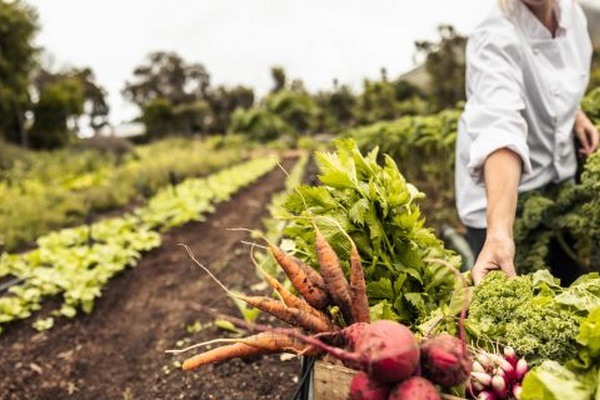
Specialty crops, including apples, asparagus, cherries, blueberries, cucumbers, carrots, lettuce, and tomatoes, account for $3.12 billion in annual farm gate sales in Michigan. When including downstream activities like packing, processing, and distribution, this figure rises to $6.3 billion in total economic output. The sector supports approximately 41,700 jobs across the state, including 24,000 directly on farms. The industry's economic footprint extends into rural communities, supporting not just farm employment but also grocers, restaurants, hardware suppliers, and other small businesses.
Michigan's diverse crop mix and geographical advantages—like the moderating influence of the Great Lakes—make it one of the few U.S. states capable of large-scale fruit and vegetable production. Much of the produce is consumed outside the state, contributing significantly to regional and national food supplies, particularly east of the Mississippi River.
Labor and infrastructure challenges
Labor costs are cited as the most pressing threat. H-2A visa regulations and the associated Adverse Effect Wage Rate have driven labor costs to unsustainable levels—up to $30/hour when all benefits are included. Farmers, unable to pass these costs on due to low-priced imports, are considering scaling back or abandoning high-labor crops.
The state's specialty crop infrastructure—including cooling, packing, and processing facilities—is also at risk. These facilities are often crop-specific and not easily repurposed. As investment stagnates due to tight margins, the loss of one major crop (like apples or asparagus) could trigger a domino effect, reducing the viability of other crops that rely on shared infrastructure and seasonal labor continuity.
 © MSU
© MSU
Long-term risk and interdependence
The report emphasizes that Michigan's specialty crops function as an interconnected system. Losing multiple crops—or even a key "anchor" crop—could collapse local economies, particularly in regions dependent on seasonal labor. A shift toward row crops like corn or soybeans would significantly reduce economic output and jobs. For example, a 1,000-acre specialty crop farm might employ hundreds, while the same acreage in row crops would need just two workers.
With limited investment incentives and high replacement costs, the report warns that once infrastructure is lost, recovery is unlikely. Community impacts would extend to schools, housing, and tourism.
Michigan's fruit and vegetable industries are not just agricultural assets—they are pillars of rural economies and vital components of national food systems. Without targeted support and structural adjustments, their decline could have far-reaching consequences.
To view the full report, click here.
For more information:
Zachariah Rutledge
Michigan State University
Tel: +1 517 582-1245
Email: [email protected]
www.canr.msu.edu