Peruvian pitahaya is gaining ground in the international market. However, the expansion of this fruit in the market is not without complications. The challenges that the industry faces include a lack of sanitary protocols to enter the United States, competition from other producing countries, and price fluctuations.
Epic Farms, a company led by Germán Caballero, in the Pisco Valley, Ica, has specialized in the production and export of red pitahaya with fuchsia pulp. "Peru is emerging as a major pitahaya producer, as it did with blueberries in 2007," Caballero stated. In just one year, the company has managed to expand its exports to Spain, the Netherlands, and France. It has also recently signed contracts to ship its fruit to England and Germany.
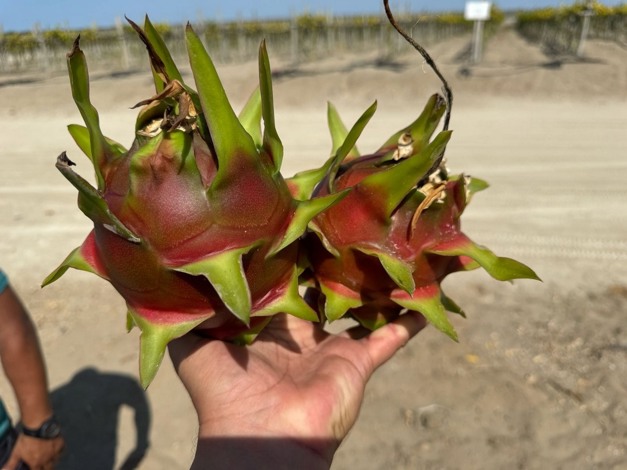
Pitahaya production in the Pisco Valley runs from January to May or June. This window allows Peru to position itself in the market when Europe and the United States are in winter, which generates an important commercial opportunity since these markets do not produce pitahaya in that season (except in greenhouse crops).
Despite the growth, the company faces several challenges. One of the main ones is the fall in international prices. "When I started exporting in 2017, I sold pitahaya at $10 per kilo FOB; now the price is around $3.50," explains Caballero. This fall in prices is due to the increase in global supply, as more countries are betting on the cultivation of this fruit. However, Caballero stated that he is confident that the consumer will differentiate the quality of the Peruvian pitahaya and allow the price to recover to more profitable levels.
In March 2024, when the season in Ecuador (one of its main competitors) ended, Epic Farms obtained higher prices because less fruit was available in the market. In 2025, the company plans to close the season in May-June with 200 tons of production, a significant growth compared to the 20 tons exported in its first campaign.
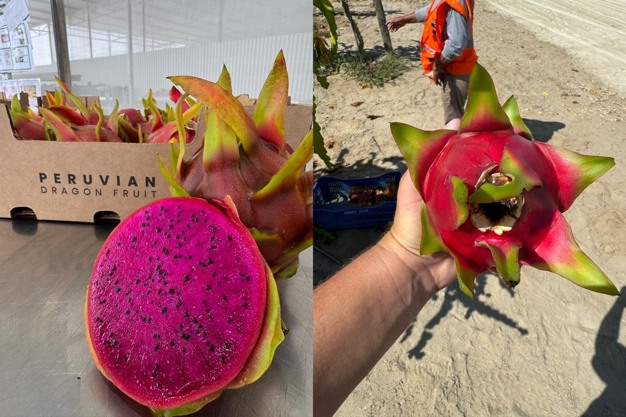
Another obstacle is access to new markets. Currently, Peru does not have sanitary protocols to export pitahaya to the United States, an important market for this product. "We are waiting for APHIS inspectors to arrive in April to complete the process with SENASA and open up this market," Caballero stated. The United States' geographical proximity and its demand for organic products make this a strategic destination for Peruvian pitahaya.
In terms of production, Epic Farms has opted for the American Beauty variety developed at the University of Florida, which stands out for its sweetness and self-pollination. In addition, the company has adopted sustainable practices, such as using photovoltaic energy and having certified organic production. "Our great advantage over competitors such as Ecuador, Colombia, and Brazil is that Peru can produce organic pitahaya at low cost thanks to its climate," the entrepreneur stated.
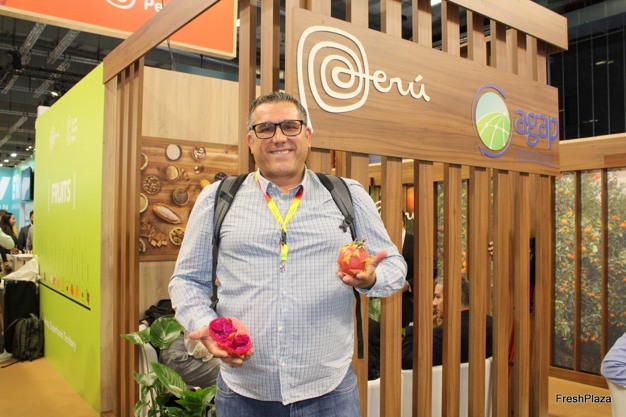
Caballero is confident that Peruvian pitahaya will continue to grow in the global market. "This is the beginning of an industry that could position Peru as a world-leading organic pitahaya exporter in 20 years thanks to its product quality, the growth in demand for fruits rich in antioxidants, and a commitment to sustainability," he stated.
 For more information:
Germán Caballero
Epic Farms
Peru
Tel: +51 954 178 648
Email: [email protected]
www.epicfarms.pe