Colombia’s banana industry has taken advantage of the relatively low worldwide supply of this staple fruit to export more to South Korea and the European Union during the current 2023 season. According to Emerson Aguirre Medina, president of the Colombian Banana Growers Association, they hope to see a 15% increase in export volumes this year.
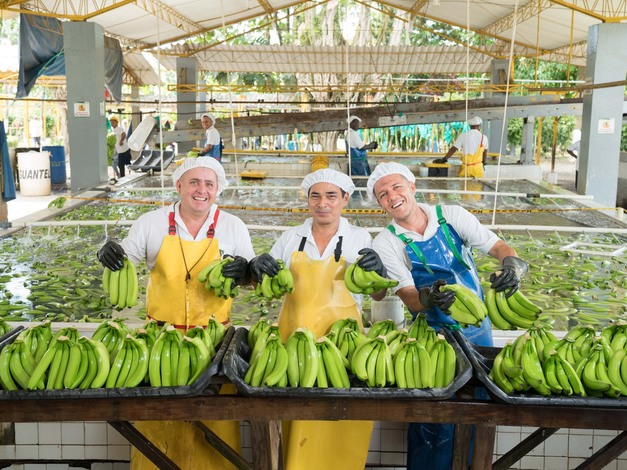
“Right now 54,000 hectares of bananas are planted in Colombia and are due to be exported. In 2022 we closed the season with 108 million boxes exported, a 15% decline from the previous 2021/22 season. In 2023 we expect a 12% to 15% growth from 2022. Because of climate change we’ve had a lot of rainfall that does not allow the bananas to grow so much. Therefore, growth has not been as much as we would like, we want more production. Unfortunately due to this heavy rainfall our production is not correct. Our principal market is the EU where we are looking to participate more. Because the EU has added value to Colombia from a SEG labour perspective, which other countries don’t value as much. Even though Colombia has a FTA with China, it has not been a stronger market. The China market does not value the social aspects as much as the European market. There’s been growth in South Korea recently, with the EU and UK remaining our main markets. We have no interest in Russia because prices are too low there,” explains Aguirre.
He says the European Union mandate and due diligence on sustainability initiatives, environmental, social initiatives etc. has an impact for their sector, in Colombia and other Latin American banana producing countries. “All our farms are 100% ratified with the needed certifications. We especially work with the ILO and other Ngo’s who work towards the labour aspects. We have 30 years of experience and relations in Colombia with workers and banana farms and plantations with 100% of workers in this sector that have formal employment. We pay fair wages, what many supermarkets ask for to demonstrate the compromise. Colombia has 30 years of experience in this and are world leaders.”
Turning to the huge reputational risk that the Colombian banana industry faces from the illegal drug trafficking industry that often uses the banana shipments to smuggle the illegal substances out of the country, Aguirre says, they are taking control along with the Colombian Government.
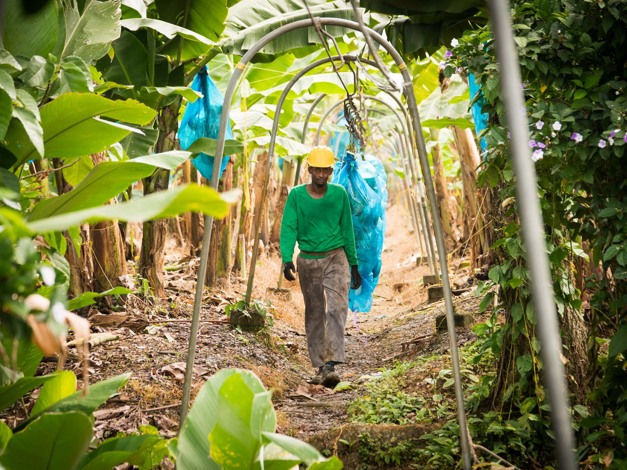
“Given that the banana sector has such a large export, of 2 million tons, it is one of the main vehicles that these criminal organisation look to for their illegal business. Our banana sector has big government support in terms of the armed forces. An amount of $3 million dollars per year is spent to prevent the use of banana exports for these illegal activities. Because of this we have been able to prevent banana exports in Colombia from being the vehicle for this. These criminal networks have now sought other ways. The degree of risk of Colombian banana exports to the EU to be a vehicle for drug trafficking has gone down, with inspections in Europe having gone down too. Inspections have become less necessary now, due to extra controls from outside and inside Colombia,” states Aguirre.
Banana discussion in Madrid
“Madrid is a great opportunity for Colombia, where one of the main focuses is to meet with German retailers. This is because that market tends to mark the buying tendencies of price, so they want to discuss labour sustainability, of which Colombia is a leader in this aspect. Secondarily we will meet with all the Latam banana producers so that they can work together for fair wages and fair prices.”
He says they have seen better prices in the global banana market in 2023 because of a few key reasons. “The lower offer of bananas in the market. Colombia has presented stability vs the European continent and the war between Russia and Ukraine. Our labour and sustainability has helped to bring up the price in order to maintain the work of cultivating bananas,” concludes Aguirre.
For more information:
Emerson Aguirre Medina
Colombian Banana Growers Association
Email: [email protected]