The Turkish fruits have had a hard time dealing with the weather conditions. Sara Aslihan Metin, responsible for sales of Turkish fresh produce exporter Göknur, states the temperature in Turkey reached over 50 degrees Celsius. “Temperatures began to rise from the second week of July. The perceived temperatures rose above 50°C and the scorching dry air prevailed in the region, along with the northerly breeze. Until the last week of August, the temperatures remained at high levels and the northerly breeze continued for weeks, recurring periodically. Although high temperature weather gives positive results for annual plants, such as sunflower, corn, cotton and so on, it has a more negative effect on fruits.”
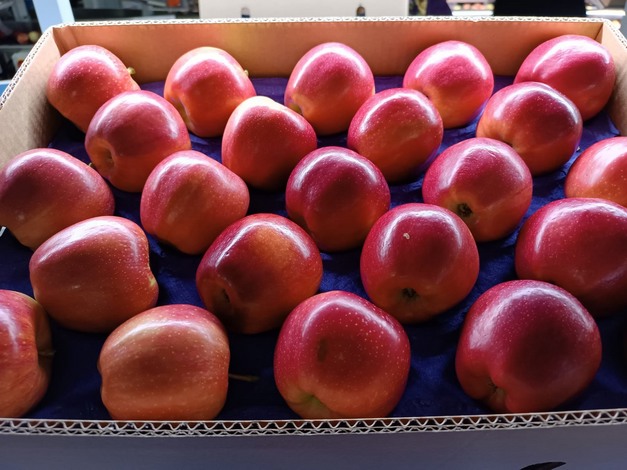
Several techniques were applied to try and protect the crops as much as possible, with varying success rates, Metin explains: “We tried to protect watermelons, melons, tomatoes, peppers and such from the heat, by covering them in the form of a shading method. Fruit trees were protected with clay applications sprayed on the fruit, however, the rate of successful results in terms of protection decreased due to the extremely high temperature and humidity, as well as the weather lingering in the region for a long time, in combination with the northerly breeze. Farms and crops that were adversely affected by the heat are abundant in the region. With extreme temperatures, the water content of the fruits decreases, wilting begins, wrinkling occurs and local sunburns occur on the shell surface.”
These high temperatures had an impact on volumes, but also on the way employees could conduct their work, especially in the fields, Metin says. “This physiological disorder, caused by the harmful rays of the sun and high temperatures, causes serious losses in yield and quality in agricultural production. It was also rather hard on workers, especially between 10:00 and 15:00, working on the farms became impossible due to the heat. To work around this, work is organized in the evening and at night.”
Metin hopes that the worst is now behind them and the situation will return to normal by the start of next month: “Weather conditions progressed badly until the last week of August and we expect normalization by September. From this period until the harvest period we’ll rely on irrigation and fertilization. We aim to complete our maintenance and deliver our products to the harvest in an optimum level as healthy as possible. Since the increase in temperatures triggers drought, it causes our water resources to be withdrawn, as well as the consumption of the plant increases as the water demand of the plant increases in hot weather. We have to use water in a controlled manner, we keep our water consumption under control with drip irrigation.”
For more information:
Göknur Gıda
Tel: +90 0533 326 33 31
Email: [email protected]
www.goknur.com.tr