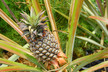
A laboratory where bacteria, fungus, micro-algae and biological fertiliser is produced, is at the heart of growing good Costa Rican Pesticide Free Pineapples on a 1 200 hectares residue free farm. Piñas Cultivadas de Costa Rica (PCC) is the certified pesticide free and zero residue farm that exports close to 4 million boxes of pineapples to Europe and the US per year.
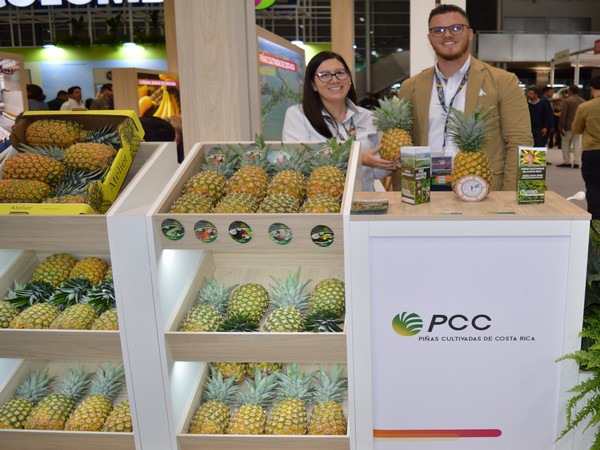
Ing. Jennifer Salazar and Ing. Brandon Hernandez Suazal
According to Ing. Jennifer Salazar, commercial manager of PCC they accomplish this goal by using 60% less chemicals through research and development through another bio product business that they own.
“We had to build a bigger laboratory this year, because we need to reproduce more bacteria and fungus for our farm, and hopefully next year we could sell this biological products to other growers. In 2019, we had the certification pesticide Free for our whole farm. In 2020 we began a new business of biological controls, so now we have a laboratory that reproduces bacteria and fungus that colonized some types of insects that attack our plantation. In the whole program of application we apply biological repellent made from pepper, ginger, hot chili, vinegar, and some other extracts.
"Most of the ingredients we buy from the local growers, so we helped to them to buy their class B production. We make our own fertilizer called BIOLES: so we make a specific formula for each stage of our plantation, and the base of each biol is the fermented liquid dung of cattle we have. These cattle eat the crowns of the pineapple, so we really apply the circular production of all waste we have from our farm. At the same time, we are doing research on micro-algae, this micro-algae stimulates plants, so we are doing some tests with micro-algae and the plants are more climate resistant and have a higher number of roots.”
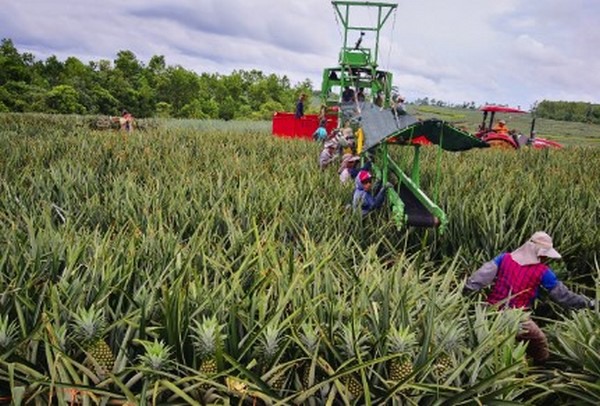
PCC grows the pesticide free pineapples, which are not to be confused with organic pineapples says Salazar. “The quality and sizes are the same, because it is pesticide free, we can use chemical fertilisers. It is not organic pineapples, so it is the same quality fruit but without pesticides. It is also not cheaper to produce. Growing pineapples this way is riskier, because we have to be very pending of the insects and sickness of the plantation.”
Her father started the pineapple growing in 2016 with the help of established growers who had the knowledge. “After a year we started to pack in this grower’s packing station, but we felt that the chemical program was too much, because sometimes we did not have any problem, and the chemical program tell us we have to apply it. So after two years of producing conventional fruit, my dad did a search about other ways of producing without so many chemicals. In 2019 a client told us about Pesticide Free Pineapple, about a market that was opening in France. My dad did more searching, and in Costa Rica the certification company KIWA, told us they were implementing this Zero Residue (pesticide free). The first meeting they told us: if you want to do this project, remember: it is easier to buy than to search, so we had to do a lot of searching for biological solutions. So we started to search and developed a new business of biological controls,” explains Salazar.
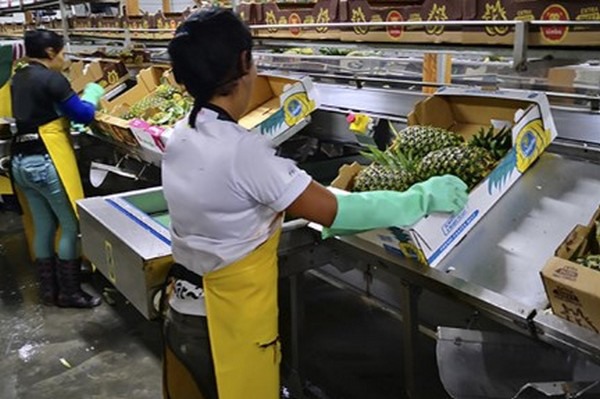
Up to 90% of their pineapples are exported to the European market, while the rest goes to the US. “All our clients have the same long term vision than us, so we try to build good relationships with all of them, who we have been working with for many years. We would like to explore other markets too,” states Salazar.
For more information:
Jennifer Salazar
Pinas Cultivadas de Costa Rica
Tel: + 506 2105-3506
Email: [email protected]
www.losnacientes.com