Vashini Exports are certified coconut farmers in India. The company has it own farmland and sells coconuts to different supermarkets and wholesalers internationally, including in the UK, Spain, Italy, Turkey, Mauritius, The Netherlands, Reunion, Australia, Canada and South Africa. The coconuts are grown in the Pollachi region, in the South of India. The region is well known for its coconut production.
Vashini Exports owns 38 hectares of certified land with a number of international certifications, including Global GAP, FairTrade, GRASP and Organic.
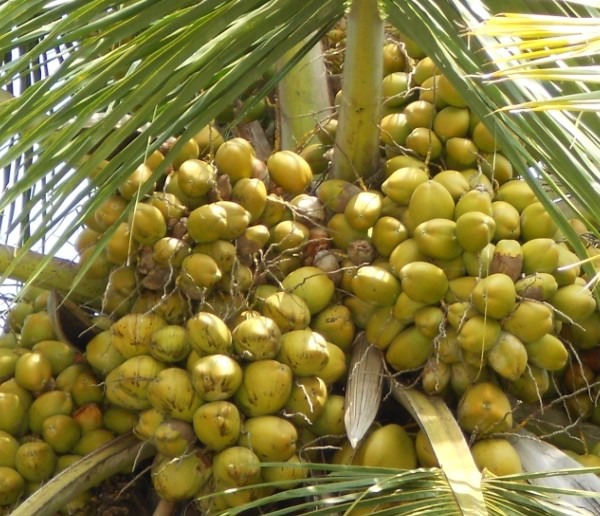 Coconut tree with large crop of coconuts. This is a picture from the 2011-2012 season. This year harvest size is predicted to be a bumper crop, similar to 10 years ago
Sachin Beri is Head of Sales and Marketing at the company. He explains about the company's harvesting procedures: "When we harvest our coconuts, we do not just go and harvest the fallen coconut, which are more mature. We carefully select and pick from the tree. We harvest for export to European and other international markets when the coconut is ripe enough. We check each and every coconut for cracks, sprouts, fungus, if they're premature, over-mature, and for weight. In addition, we also weigh final bags while loading so the possibility of bad nuts and underweight bags is reduced and accuracy goes up to 98-99%. This also saves costs for our end customers."
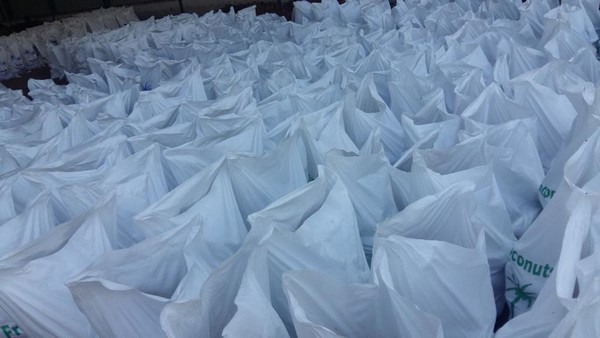
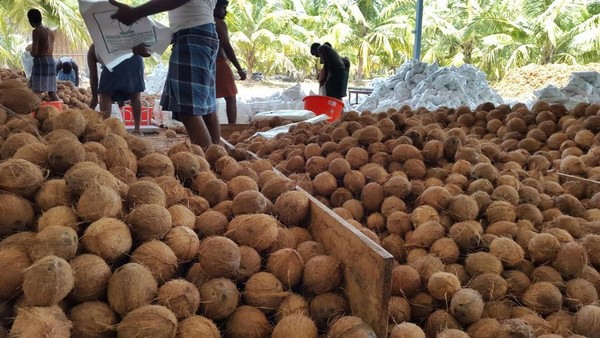 Coconut grading and packing
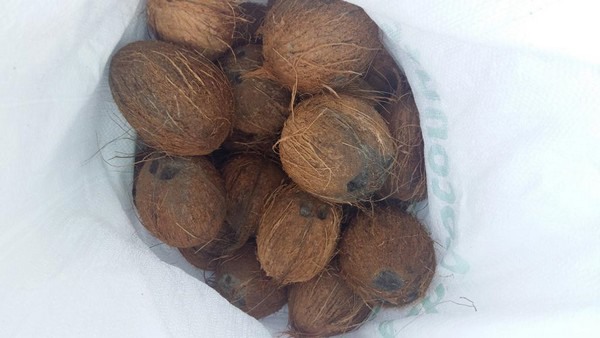
After harvest, all coconuts are de-husked, during which the outer skin of the fruit is removed. Then the product is graded by weight, bagged and tagged. Fumigation is done in line with UKL and European norms. The Coconut season is 365 days a year, but during peak season there are more ripe coconuts on the trees and sizes are better. During the off season there's less ripe fruit and smaller sizes. India is the third largest producer of coconut globally and the first in productivity. Peak season runs from April to September.
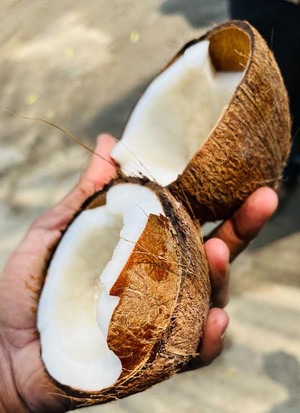
"We grade according to weight. We supply supermarkets, who usually sell coconut to their customers by unit price: typically 400gr and more. We supply mature, brown coconuts, which are consumed for their white meat, or white flesh."
Bumper season
Coconut trees consume a lot of water, both from below from the soil, and above from rain. Yield and productivity are affected by the amount of rain. Sachin continues: "Last year, coconut trees consumed a lot of water: we had enormous rainfall and water supply. This season we are expecting a huge production, similar to the 2011-2012 season. There will be a bumper crop with a big supply to the market."
For more information:
 Sachin Beri
Vashini Exports
www.Vashiniexports.com / www.thecoconutgrower.com
email: [email protected]
mobile phone: +91-9988856969