The situation is changing every minute.
So says GinaFruit’s Hugo Castro of the connection between the Russia-Ukraine war and the ensuing sanctions and limitations and what that means for banana producers and shippers in Ecuador particularly.
While Ukraine is now closed as a market for bananas, that effect on the banana market is more minimal. “By statistics, Ukraine is about 10 percent what we export to the Baltic countries. More or less it’s about 80-100 containers. So the effect is bad but not that bad,” he says.
Ecuador and Russia
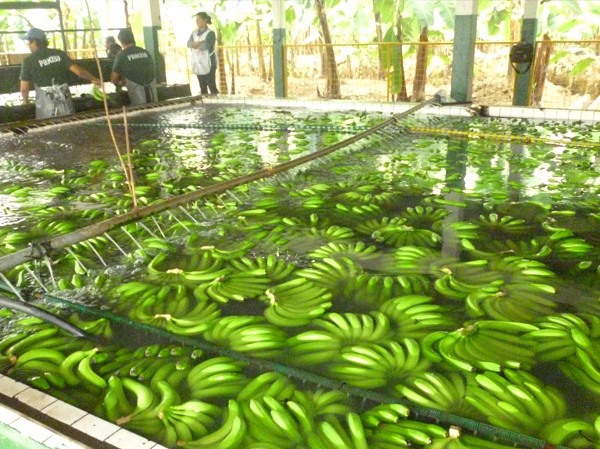
However Russia is a significant importer of bananas, so much so that Ecuador has a direct trading route between Ecuador and Saint Petersburg through which it sends 1.5-2 million boxes of bananas weekly. “If the world decides to block Russia in trade like it’s happening right now, the banana system--and all the production and export around the world--will definitely collapse,” says Castro.
As he notes, the banana industry operates on a equilibrium. “We cannot store bananas--we harvest and load and we don’t have time to waste,” he says. “Being a fresh producer with a limited shelf life, we also cannot ensure long transit times. So again if that equilibrium collapses, all other banana producing countries will be affected.”
The immediate concern is: what happens to all those bananas already on the water? “All the cargo that was on the water and booked until last week, week 8, was diverted to other ports. And now it’s sending too much fruit to other ports,” says Castro, noting some fruit could go to ports such as Hamburg, Rotterdam or Mediterranean ports such as Romania, Albania, Italy, Croatia or Greece.
The concern, he says, is if the markets of banana consuming countries fall. “There could be a domino effect. Russia first, then Baltic countries, the EU countries, then the U.S. until the systems clear out of all these bananas,” he says. “That will take a lot of time--months of bananas being diverted to being sold on consignment or something else.”
Ecuadorian consumption
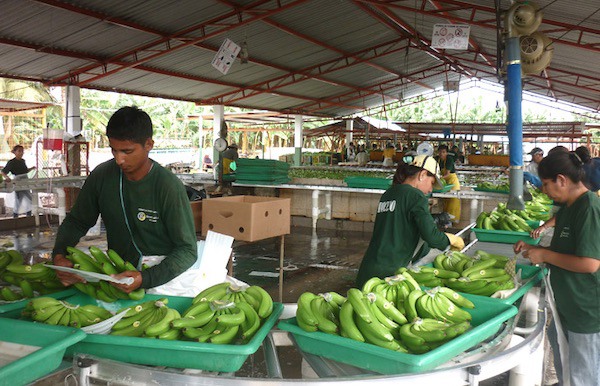
One thing is also likely: the bananas won’t be consumed in Ecuador. “We are a 100 percent export country on bananas. Local consumption in Ecuador of bananas is almost none. And neighbouring countries also produce bananas so they won’t allow them in either,” says Castro.
While there were indications Ecuadorian bananas will move to the U.S., a market largely dominated by contracts with multinationals and little to no spot market buying, back in Europe, there continue of course to be concerns over Russian consumption. “I don’t know if the Russians will continue consuming at the same speed as they were consuming. Even if we could continue trading and receiving money from them, the speed of consumption will definitely go down,” says Castro.
For now, Castro hopes for the best. “We’re hoping food trade is safeguarded by the international laws and we can still trade,” he says. More likely an option is limiting Ecuadorian banana exports. Possible solutions might be government purchasing of bananas or agricultural purchasing to feed livestock, or sending it as food donations to food-starved regions.
Regardless, it’s another blow to an industry that was already seeing challenges throughout 2021, from increasing cost pressures to limited banana-related supplies such as packaging. “We thought at the beginning of the year that the banana business was complex for 2022 because of the shipping limitations. Now with this, the producers will suffer,” he says. “The prices that we receive will definitely be below production cost.”
 For more information:
Hugo Castro
GinaFruit
Tel: +593 999423369
[email protected]
www.ginafruit.com.ec