Big spenders will spend more if you give them what they want.
This was one key conclusion of a recent webinar on The State of Brand Love in Fresh Produce, conducted by Foodmix Marketing Communications, an Elmhurst, IL-based food and beverage marketing agency.
The webinar examined the results discovered via a survey it conducted in 2021, where 1,000 consumers representative of the U.S. population were surveyed around the topic of produce branding. “There were three objectives for this: we wanted to understand the attitudes and behaviors of fresh produce consumers; what’s the recognition of branded products; and how do they perceive the benefits and differences of branded produce vs. a commodity product,” says Nadine Baarstad of Foodmix Marketing Communications.
While the survey ultimately looked at the whole group of respondents that participated in the study, some unique findings emerged from a group of heavy spending shoppers--as in the 31 percent of respondents who spent more than $25/week on produce.
Here are eight key findings from the survey, presented by Dan O’Connell, founder and CEO of Foodmix Marketing Communications.
1. Gen Z is actually brand-centric: “Many people have discussed that younger consumers aren’t as brand centric as older generations but this study changed that perception,” says O’Connell. He notes that younger generations are in fact more brand-centric (2/3 of millennials and GenZ surveyed indicated that branded fresh produce is important), though their connections to a brand are different than previous generations. "As they enter adulthood, their shopping habits aren’t completely developed. However we expect that as they mature, they will continue this trend of brand affinity,” says O’Connell.
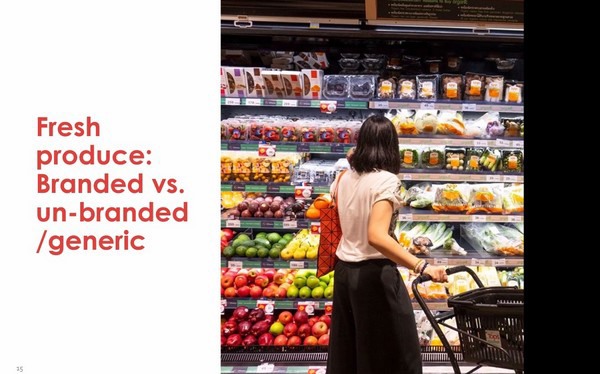
2. Big spenders will pay more: “In the $25+/weekly produce spending group, they’re even more brand-focused and it’s an important part of their weekly shopping,” says O’Connell. He notes the survey touched on how much more big spenders would pay for their favorite brands. While 35 percent said they’d spend up to 5 percent more, another 35 percent said they’d spend 6-10 percent more and 30 percent said more than 10 percent more.
3. Consistency matters: “Sometimes people buy brands and sometimes not. But that can be explained by availability--sometimes a branded item isn't available and brand-centric consumers are forced to pick a non-branded item,” said O’Connell. “So part of the challenge is making sure the brands are available to the consumers.”
4. Favorite brands have weight: “Fifty-four percent of respondents said buying branded produce is important to them,” says O’Connell. And favorite brands that consumers have brought into their lives come with a high level of trust. “There’s a halo around those brands in their lives. They believe those brands are more consistent in quality, fresher, better value for their money, they really like knowing where their food comes from and how it’s grown. This is even more important generationally. Younger shoppers are much more interested in that. They find the brand to be better tasting, trust it to be safer and be sustainably grown and processed,” says O’Connell.
5. Connection matters: “How do we capture these consumers who want to embrace their brands? It comes down to building connections,” he says. And happy, regular consumers can become your best ally because they will advocate your brand to families, friends and peers, particularly amongst higher produce spenders.
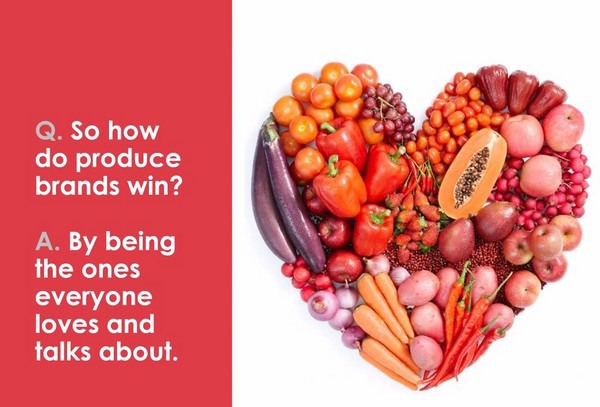
6. Consumers are monogamous: “When asked what other brands besides legacy brands, 41 percent of respondents struggled to name a second brand,” says O’Connell. “This is an opportunity to make a connection with consumers because they want more.”
National and regional brands resonated particularly well with consumers. “Brands in general, 83-85 percent had a brand that they were head over heels in love with and were more likely to sing the praises of. We’re considerably lower in produce and it’s an opportunity to tell your true story,” says O’Connell.
Frequent dating also leads to brand love in the produce section. “When we hone in on heavy spenders, they're much more connected. The percentage who love fresh produce brands, who spend $50 or more a week, 75 percent of them have at least one brand that they’re ready to advocate for,” says O’Connell.
7. Authenticity matters: “The authentic story matters and it’s the advantage we have in competing against retail brands,” says O’Connell. “There’s a true story behind every one of your crops and bringing that to life is a huge differentiator from retailer brands who don’t have that seed-to-table story.”
8. Opportunity awaits: “It’s the best of times. We’re on a new frontier with the opportunity to do more,” says O’Connell. “Brands are trending up and consumers want more from them. Our most important customers are embracing brands. And a lot of brands are scoring 1 or 2 on the rating scale. Very few powerhouse brands exist.”
 For more information:
Nadine Baarstad
Foodmix Marketing Communications
Tel: +1 (630) 366-7531
[email protected]
www.foodmix.net