The pomegranate harvest is starting in the Spanish provinces of Valencia and Castellón, where abundant rainfall has fallen in recent days. The European markets are relatively empty of pomegranates, as Turkey has yet to start, and the demand is quite high.
"Fortunately, the rains are not taking a toll on the quality of the pomegranates, although if it continues to rain, they could suffer cracking," says Inma Torregrossa, manager of Inma Fruits, a producer and marketer of kakis, pomegranates and stone fruit. "We started harvesting the first pomegranates yesterday. In this first stage of the campaign, we will work with the Acco, Deep Purple, Smith and Emek varieties, and later, at the end of September, we will continue with some Shani Yonai, Wonderful and Mollar."
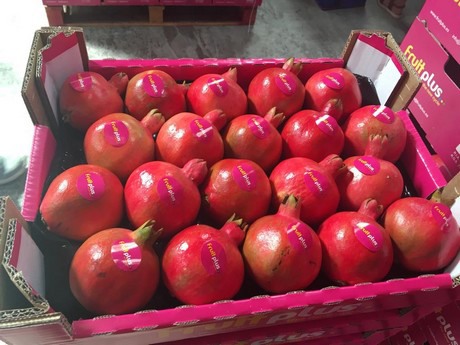
In general terms, the production volume is down by between 20 and 25% compared to last year and there is a lack of good calibers.
"In southern Spain, in Huelva, the season started at the beginning of August this year, so there has been no overlap between the different producing areas. The demand for pomegranates is very strong at the moment, especially for the larger calibers. Peru is no longer on the market and Israel is also just starting. Prices are higher than at the start of the previous season, which ended up being quite a difficult one due to low prices. We hope that these prices will be maintained, at least until significant volumes of Turkish pomegranates start arriving," says Inma Torregrossa.
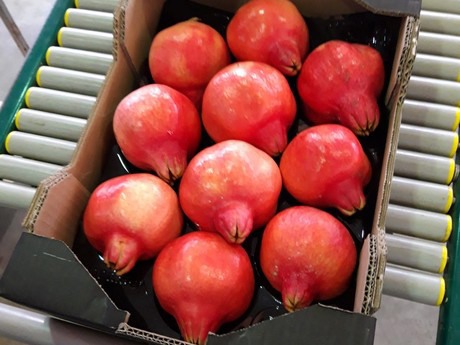
According to the manager of this Valencian company, the deep red varieties are very popular. "It depends a little on the needs of each market. The Smith is sourer and is appreciated in Germany, the country that consumes the most pomegranates and where all kinds of varieties are accepted. Other countries, such as Italy, Belgium and the Netherlands, prefer sweeter varieties, such as the Acco. Spain is the market that demands the sweetest taste in pomegranates, since consumers there are used to the traditional Mollar, whose color is pale red, but which reaches great calibers and contains a lot of juice with high Brix degrees."
"This year, we'll be able to ship kakis to distant markets"
The harvest of Valencia's Rojo Brillante kakis, which account for around 90% of the Spanish production, will still take a few weeks to start. The fruit is growing in size thanks to the latest rains. A full and quality harvest is expected this year, unlike last year, when more than 50% of the production was lost due to frost and hail.
"We hope to harvest good quality kakis with medium to large calibers. Last year's impact on the quality and the shortage of fruit meant that we could only focus on the European markets. This year, we will have enough quality volumes to be able to ship to all the distant markets to which we couldn't export last year. We'll be able to ship to Asia, South America, the Middle East and North America."
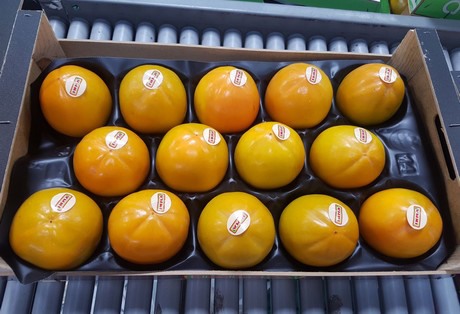
"We still miss Russia, which was a good destination for the more standard quality kakis. We hope to open new markets soon, such as India or Peru, but our main objective is to be able to access China," says the exporter.
For now, according to Inma Torregrossa, the competition from other countries producing Rojo Brillante kakis, such as Italy, Portugal, Morocco or Greece, is not remarkable. Spain still stands out as the biggest exporter of this product. "We are the best at keeping the production and marketing of kakis under control," he says.
For more information:
Ernesto Machancoses
Frutas Inma
Carrer de L’Olivera,
46291 Benimodo, Valencia. Spain
Tel.: +34 96 253 14 71
[email protected]
www.frutasinma.com