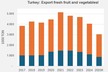
Currently, Congress is expected to consider approval of the new US-Mexico-Canada Agreement. The deal was brokered between the three nations as a more modern replacement to the North American Free Trade Agreement, better known as NAFTA.
President Trump told reporters Monday he’ll work with congressional Democrats on the deal and he expects House Speaker Nancy Pelosi would back it. Democrats want the deal to include stronger enforcement provisions, among other possible changes.
However, many of Florida’s fruit and veggie farmers say the agreement isn’t what it should be and they’re running out of time before ratification. Lawton “Bud” Chiles, the son of Florida’s late Governor Lawton Mainor Chiles Jr., is one of those growers working to tell federal lawmakers NAFTA’s replacement does little to benefit his blueberry operation, north of Tallahassee at Jubilee Orchards.
Farmers critical of the agreement feel it lacks protection against what they consider unfair competition from Mexico. There, fresh fruit can be produced cheaper, due in-large part to low-cost labor. It’s then dumped into American markets.
Florida’s Farm Bureau President John L. Hoblick went so far as to say the pact “fails to address the plight of our fruit and vegetable producers” and that it was “an unfortunate, missed opportunity,” shortly after the agreement was announced last August.
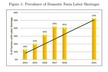
In short, Florida farmers struggle to compete with these Mexican imports and farmers worry that unfair trade practices endanger the state's agriculture industry.
Bud Chiles is a blueberry farmer in North Florida, has struggled to compete with cheaper blueberries imported from Mexico. "The distributors have become very, very focused on purchasing large farms in places like Chile and Argentina and Mexico and Central America," said Chiles. "The reason that’s a big problem for local growers is Mexico, particularly, they’re growing blueberries down there with large subsidies from their government.”
The subsidies, along with lax labor standards and farming regulations, mean it’s incredibly cheap to grow produce in Mexico. To put that into numbers: for every dollar spent by U.S. blueberry farmers, their Mexican counterparts spend just 10 cents, according to a University of Georgia study.
For distributors, it’s a no-brainer. They can buy the Mexican-grown fruit at a lower price, leaving a larger profit margin. But that comes at a price for domestic growers.
Source: wtxl.com