Although a great number of Peruvian foods have already earned a reputation internationally for their extraordinary quality and nutritional properties, there are still some gems that only Peruvians, and no one else in the world, enjoy.
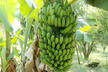
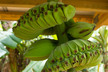
This is the case of the Isla de Mala plantain, whose aroma and flavour are incomparable to those of any other variety, and which is practically unknown beyond the country's borders. Tasting it when still fresh is one of the privileges for the people in these lands.
William Daga, specialist in fruit trees of Sierra and Selva Exportadora, stresses the importance of differentiating between plantains and bananas, which are different, with the latter being the ones that are usually exported.
"The Isla de Mala plantain stands out because it is eaten directly, while most other plantains are boiled or fried," he says.
Another relevant fact is that "although our country grows this fruit both in the north, as in the jungle (Chanchamayo and Satipo) and in Cusco, it is in the district of Mala, in Lima, where it stands out for its characteristics. It benefits from the weather conditions and the surface water of Mala, from the salinity of the soils and from the excellent quality seeds that they work with. That makes them very good for fresh consumption."
Another important factor is the ripening, as in Mala, the fruit is allowed to develop in the tree, while those coming from the jungle (region that produces the largest volume) or the north are artificially ripened with ethylene, which alters their flavour and aroma.
William Daga estimates that in Peru, between 15 and 20% of the total acreage devoted to plantains corresponds to that from Isla de Mala. And everything is intended for domestic consumption, which has been on the rise in recent years, motivating a growth of both acreage and production. Also, Isla de Mala plantains always reach higher prices than bananas.
But are there possibilities to export it? The specialist from Sierra y Selva Exportadora tells us that in 2014, he participated in a meeting of Latin American producers of plantains and bananas, where a great interest was shown in Isla de Mala plantains, because they didn't know the variety. The idea was to study it and find out whether it would be possible to market it internationally, as there is nothing that comes even close in terms of flavour and aroma.
While attempts to internationalise it are in the works, Isla de Mala plantains remain a delicacy that only Peruvians can afford.
Source: agraria.pe