Achachairu or achacha is a Bovilian tree that belongs to the family of the Clausiaceae or Gutiferas. Its fruit is an edible berry that is called achacha in Spain, where it is still largely unknown. This curious fruit just arrived a few weeks ago for the first time to the markets in Malaga, and it was imported by Malaga Natural, which has its headquarters in Mercamalaga. Malaga Natural, which imported the fruit by plane from Guatemala, is trying to introduce the achacha in the Costa del Sol and in Andalusia. The fruit is sold in boxes of two kilos and its wholesale price ranges between 8 and 8.50 euro per kilo, which means that it will be more expensive for consumers.
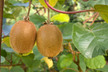
The fruit looks very similar to a medlar, even though it's not related to it. It's a little bigger than a lemon and its skin is thicker than that of the medlar. It has an egg shape and it's usually orange, although it turns dark when it matures. Its skin, which is bitter, can be easily removed by hand. It has a white and fluffy pulp that envelops a brown seed inside. The largest fruits, which can have a diameter of 4 to 6 centimeters, can have up to two seeds. Its flesh is tender, sweet, and refreshing. It can be well preserved for four to six weeks.
There are some specimens in the experimental farm of the Subtropical and Mediterranean Fruit and Vegetable Institute (IHSM). They were brought from Bolivia, but they still haven't yielded any fruits. The scientists of this center in Malaga have doubts about whether it will adapt well in Malaga because, in Bolivia, it is grown in low altitude areas where the weather is more tropical climate than in Malaga.
Source: diariosur.es