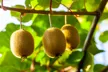
This has been revealed as the harvest in the experimental plantations of Areeiro, which has about 3,000 square metres devoted to this crop, has been completed. This year's production has reached 550 kilos, about half of last year's figure.
It was already reported a month ago that the lack of rainfall had led to an earlier start of the harvest compared to previous years, but also that the fruit was smaller, according to the manager of the Horsal cooperative, Fernando Veiga.
Now the EFA confirms this and, through MP Eva Vilaverde, has highlighted that "this year, the kiwi harvest hasn't been great and the fruit is small, just like in all European countries."
The weather conditions recorded during the flowering period, "with very hot days before summer which contributed to reduce pollination, are to blame for this." Moreover, "the calibre of the kiwis usually increases in early September, in a stage in which the availability of water and environmental humidity are essential," so the drought played a key role in reducing both the production volume and the fruit's sizes.
Source: farodevigo.es