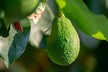
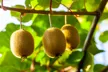
Juan Carlos García believes that the kiwiberry varieties that could best adapt to the weather conditions of the province of Huelva are the yellow or red. These are also the ones that could be more successful in the market, since they are sweeter than the green, which usually have a sour taste.
These kiwiberry varieties don't need many hours of cold and are sensitive to PSA. However, they are usually part of the so-called club crops, which means that they their plantation is restricted, as explained by the Asturian technician.
In Spain, there are hardly any kiwiberry plantations. It is a very new crop, introduced in Europe through Poland, where "you can find many of the existing varieties and the most interesting ones," said García. Kiwiberries arrived to Galicia from this Eastern European country, and some plants arrived to the Serida from there at the end of the last century.
In Huelva, kiwiberry plantations may need shade nettings for protection against the high temperatures recorded during the summer months. The harvest in Asturias takes place between mid-August and October, but in Huelva, the fruit should become ripe earlier.
The most important consumer markets are the Anglo-Saxon and Asian countries, although consumption is expected to grow with the use of snack containers, which have become really popular across Europe. However, Juan Carlos Rubio points out that "the growth will not be comparable to that expected, for example, for blueberries."
Source: agrodiariohuelva.es