Belgian university protects banana diversity by hosting 1,500 varieties
Don’t expect banana plantations or tropical rainforests, though – the university’s greenhouse has only a few dozen fully developed banana trees. Their large leaves are often the size of people – or even bigger.
The collection itself is kept in more than 30,000 test tubes, where the plants are allowed to grow to about 10 to 15 centimetres.
Additionally, about 1,000 of the varieties have been backed up with a procedure called cryopreservation, in which the plant’s stem cells are frozen in liquid nitrogen and kept at minus 196 degrees Celsius.
“Without the human intervention, these would probably disappear.”
While bananas originate from South-East Asia, they made their way to Africa 3,000 to 6,000 years ago, where they became a staple food. Eventually, banana trees were also brought to the Americas.
Today, most of the bananas sold in North American and European markets originate from Latin America. The banana is a staple food for 400 million people and a total of 1 billion people consume it worldwide.
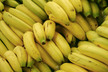
However, the diversity of bananas is not evident to most people living in developed countries, because more than 99 per cent of the banana market is dominated by one variety, the so-called Cavendish, a seedless dessert banana.
“The whole chain has been built around the Cavendish,” says Ines Van den Houwe, curator of the International Musa Germplasm Transit Centre, home to the world’s largest collection of banana germplasm.
The collection at the University of Leuven helps protect these varieties as the lack of diversity in the Cavendish banana puts the entire industry at threat. The centre is under the auspices of Food and Agriculture Organization of the United Nations (FAO) and is managed by Bioversity International, a non-profit international agricultural research organisation.
Read more at gulf-times.com