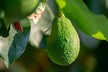
The Canary Institute of Agricultural Research (ICIA), an autonomous body attached to the Canary Islands' Council of Agriculture, Livestock, Fisheries and Water, has registered a new avocado variety at the Community Plant Variety Office (CPVO) which stands out for its resistance to Phytophthora cinnamomi, a soil fungus that causes the main disease affecting this crop.
It has been called "Julian" and comes from an Antillean avocado seed called SS 3, belonging to the Institute's avocado germplasm collection. It is the result of the tests carried out for a number of years by researchers of the centre. It was selected because it shows a good behaviour against the pathogen that causes the rotting of the roots of the avocado tree.
ICIA president Juan Francisco Padrón explained that registering it entails the recognition and protection of this variety, and that any person or entity that wants to make use of it must have the prior authorization of the Institute.
The ICIA's Antillean avocado collection is used both in trials and as a source of plant improvement material, as well as for exchanges with other centres and the supply of mother plants to nurseries.
As a result of the work that has been carried out for years for the selection of avocados with a resistance to Phytophthora cinnamomi, researchers at the Canary Institute of Agricultural Research are currently studying the agronomic potential of four of them: the aforementioned Julian and three others which still need to be registered.
Source: agroinformacion.com