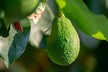
The Cabildo is giving a boost to the cultivation of avocados in Tenerife, where the fruit has already become a very profitable alternative to other traditional crops.
The avocado production is mainly directed towards the local market, "but in recent years exports have already been made to the peninsular market and even to other European Union countries," highlighted the vice president and insular councillor of Agriculture, Livestock and Fishing, Jesús Morales.
The councillor explained that "starting with the selection of avocado clonal patterns tolerant to Phytophtora cinnamoni, carried out for years by the Canary Institute of Agricultural Research (ICIA), and based on the existing collaboration between this leading centre and the company Cultivos y Tecnología Agraria de Tenerife SA (Cultesa), the R&D&I department of this biotech company has been actively working on the establishment and optimisation of protocols for the clonal propagation of these patterns."
Jesús Morales stated that Cultesa is working "on an agrarian technology project to produce plants of the Don Julián clone, resistant to phytophores. We have 50,000 Euro to improve the current plant material. There is a great demand for avocados, but we need to improve our plants. We now want to work with the Don Julián clone, which is an autochthonous one and very resistant, and our goal is to have a quality plant material, just as it was done with bananas or potatoes by Cultesa."
Their aim is to get strong plants that can give a boost to the demand for this crop in the Islands, which from 2008 to the present has seen its acreage double, having now reached 460 hectares.
"Today there is more demand than supply of avocados. This is due to the fact that it is a product that people like, and the one that is grown in the Islands has a greater quantity of essential oils, which translate into our product having some organoleptic characteristics that are better than those of avocados grown in other parts of Spain," he assured.
Morales added that "we are also working to obtain a Protected Geographical Indication (PGI) for Canary avocados, which is the next step in which we want to work together with the Canary Government."
The councillor stressed that the production of avocados "does not take place all year round." The most important places for cultivation in Tenerife are in the Orotava Valley, as well as in the South, especially in the Güímar Valley, where avocados have been cultivated for a long time, adapting perfectly to the climate.
"This is not about replacing one product with another. Avocados will have their own market niche, because there is a lot of demand," he said.
Professionalization strengthened in the fields
The data presented reflect "the professionalization that the sector is experiencing, which is seen, among other aspects, in the expansion of the acreage devoted to open-ground crops, the ones intended for the internal market, to 1,070 hectares, which is a 16% growth." That is to say, the acreage of family gardens has been reduced for the benefit of vegetable crops (potatoes, vegetables, etc.) in professional plantations.
"From 2004 to 2008, there had been a decrease of almost 10%, but from 2008 to 2016 the acreage lost has been recovered, returning to figures of 2000. This trend is expected to continue. In fact, according to our latest data, the area devoted to cultivation in the Güímar Valley is estimated to have increased by 12%," he said.
According to Jesús Morales, "agriculture has become more professional; investments have been made to improve the facilities, and that is resulting in a growing profitability. More and more people are looking for farms to rent or buy in order to grow crops."
Source: eldia.es