The mission was implemented by Solynta and took place in six countries: Tanzania, Kenya, Uganda, Rwanda, Democratic Republic of Congo and Ethiopia.
Hybrid Breeding Technology for Potatoes
A new hybrid breeding technology has been developed to accelerate breeding activities and the propagation of starting materials. This technology enables breeders to develop new potato cultivars that are attuned to the needs of the local producers and markets, much more rapidly than conventional breeding. In addition, the high performing products are uniform hybrid true seeds.
Tens of millions of true seeds can be produced within one growing season, which are devoid of any pathogen. Potato true seeds have a logistical edge compared to seed-tubers: they are far smaller, only 20 grams instead of 2500 kg is needed for one hectare. These true seeds are clean, disease-free and easy to ship and can be stored for years.
This technology has been developed by the Dutch company Solynta that has been awarded as National Icon by the Dutch Government.
The Potato in East Africa
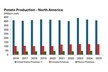
Potatoes are a major food crop contributing to food security in East Africa. It is an important cash crop and is widely grown by small-scale farmers in the highlands. The production of the crop in East Africa has more than doubled in the last 20 years.
The single most important constraint, that prevents productivity and profitability in the potato value chain, is the lack of high quality starting material. Currently farmers use heavily diseased, expensive, perishable and bulky seed-tubers mostly reused from last season's harvest, which lower the usable yield and demand conditioned storage.
Using uniform hybrid true potato seeds would eliminate this problem. Results of initial trials, showing that the hybrid potato has the potential to more than triple yield to 29 tons/ha instead of 8 tons/ha which is the current local average, were presented at the African Potato Association Congress. Clearly showing its breakthrough potential for East Africa’s food security.
The two most evident advantages are:
- The availability of disease-free true hybrid seeds, that can be produced in large quantities in only one growing season and hence provide excellent clean starting materials for the local potato production systems, which are easily shipped and not perishable;
- The fast and dedicated co-creation of hybrid potato cultivars that are adapted to local conditions and to the needs of the local stakeholders in the potato food chain.
You can find further information in the full report here.