The Councillor of Agriculture, Livestock, Fisheries and Water of the Government of the Canary Islands, Narval Quintero, announced on Wednesday in Parliament that his department would ask the Spanish Ministry of Agriculture, Fisheries, Food and Environment to impose "the most severe sanction possible against importers of illegal tropical and subtropical fruits, which could result in an offense against public health, with an economic penalty of up to three million Euro and the withdrawal of the importer's licence."
In a parliamentary commission, Quintero highlighted the increase in inspections on the part of his department, mainly in commercial channels and retail stores.
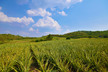
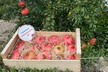
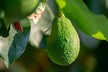
In this sense, the Councillor stressed that "this year, several batches of these fruits have been seized, mainly pineapples, papayas and avocados, which had entered without control in our Islands," and recalled that some of these items ended up testing positive for phytosanitary substances whose use is not allowed in the European Union.
"In these cases, the State will be asked to enforce block 3 of Law 43/2002 on Plant Health; that is, the most severe sanction to tackle the irregular entry of these products in the Archipelago," pointed out the Councillor.
The member of the Executive also stated that several meetings have been held with representatives of the Government of Spain to insist on the need to increase the human and material resources in ports and airports of the Islands to carry out more exhaustive controls on imports, and thus guarantee the protection of the products that are grown in the Canary Islands.
Source: eldiario.es