The prestigious Arnold Arboretum of Harvard University (USA) has selected a project coordinated by Aureliano Bombarely, of Virginia Tech University (USA), and Iñaki Hormaza, of the Institute for Mediterranean and Subtropical Horticulture (IHSM) La Mayora, in the framework of a call to study the genomics and sequencing of woody species. Its purpose is to develop a project focused on the sequencing of the genome of the pawpaw (Asimina triloba), one of the few native fruit trees in North America and the only species of the anonaceae family (to which cherimoyas belong) adapted to cold climates.
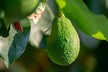
The project is part of other studies carried out by the subtropical fruit growing group of the IHSM (a department headed by Hormaza himself) on cherimoya and avocado trees. Such studies aim to find genes of interest and which can be used to accelerate the processes of genetic improvement in these species.
The goal of Harvard University's Arnold Arboretum Initiative, which has only funded two proposals in this year's call, is to keep the sequenced individuals in its collection so that they can be available to other scientists in the future.
"The project's duration is 18 months, so we hope to have it completed during the next year," pointed out Hormaza, who is currently a visiting researcher at Harvard University.
According to the head of the subtropical fruit growing department of the IHSM, "we have been working with pawpaw for some time now, because it is the only species of the cherimoya family adapted to cold climates, which makes it very interesting to study the genes involved in the adaptation to low temperatures. Our goal is to sequence the pawpaw genome and compare it to the cherimoya genome, which we are also sequencing in partnership with Aureliano Bombarely."
According to a researcher of the prestigious Malaga-based centre, pawpaw has the added interest of being one of the few native fruit trees in North America, although it is still an underutilised crop that is marketed locally, "but it may be interesting for cold areas, since it has a rather exotic flavour."
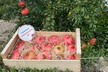
The pawpaw is a plant that can withstand temperatures of up to -25 ºC and easily reaches five metres in height. The fruit is similar in shape and size to mangoes and usually grows in clusters. Its flesh is creamy and has plenty of seeds, but not more than 16 per fruit. Depending on the variety, the weight of the fruit ranges from 75 to 300 grams. The fruit has a banana, mango and vanilla and pineapple taste, among other flavours. Although native to North America, the pawpaw has recently been introduced in Europe, where it has started to be grown in cold areas.
Source: diariosur.es