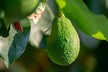
Donald Trump's plan to introduce a 20 percent tariff on Mexican imports to pay for the controversial wall to separate the borders of both countries has raised the concerns of the tropical sector in Malaga. The reason is that Trump's protectionist threats are already leading Mexican traders to explore alternative destinations for their avocados, including Europe, which is the natural market for the fruit produced in Malaga. Although there has been no impact so far, the fear is that if Mexico, which is the world's largest producer, with 1,500,000 tonnes per year, diverts just 10 percent of its production to the European Union, the mangoes from Malaga may well end up losing a considerable share of the market. Some local marketers are already receiving calls from Mexican importers, with whom they had not done any business for years, interested in reactivating their commercial relations. The province's mango and avocado marketing sector normally resorts to imports to supply its European customers only once the local production comes to an end.
For the manager of Frutas Reyes Gutiérrez, Juan Antonio Reyes, the next edition of Fruit Logistica in Berlin (one of the most important international fruit and vegetable trade fairs in the world, held from 8 to 10 February) will be key to see the extent to which Mexicans have or have not set their sights on the European market. "Malaga's and Mexico's Hass avocado campaigns take place at the same time of year, so if Mexicans decided to divert part of their production to Europe, it could cause local product prices to fall by a third, which would be catastrophic for the sector," pointed out Trops manager Enrique Colilles.
The EU annually imports around 400,000 tonnes of avocados, with its main suppliers being Peru, Chile, Israel and South Africa, since the Spanish production, which is grown mainly in Malaga and the coast of Granada, amounts to around 70,000 tonnes (50,000 in Malaga). For its part, the United States is the largest importer of avocados, with Mexico being its main supplier. It is estimated that Mexican producers export between 800,000 and 900,000 tonnes per year to the US, which generates about 1.5 billion dollars in turnover. Americans, who consume about one million tonnes of avocados, produce only 200,000 tonnes in California.
High consumption
Gutiérrez believes that the US will not stop eating avocados, even if Trump imposes a 20 percent tariff on Mexican produce. "Exporters in Mexico will have to pay for it. It is a fruit that is present in 60 percent of US households, because Americans are hooked on avocados, and what will happen is that they will have to pay more if they want to continue consuming them. Although it is also likely that part of the production will be diverted to other destinations, such as the European Union," explained Reyes Gutiérrez.
According to Prudencio López, manager of Natural Tropic, another major tropical fruit marketer in the province, which closed 2016 with more than 17 million kilos of local and imported fruit sold, the influence of the Mexican production will be noticed in the coming months. "Spanish avocados will be preferred over the Mexican because of its quality, but that does not mean that it cannot affect us. Mexico has the capacity to sell at much cheaper prices than us, because they produce up to 25 tonnes per hectare, while the yield in Malaga amounts to around seven tonnes. They can sell their fruit so cheaply that they could make local producers lose interest in even harvesting the product," affirms López.
Lastly, Benjamín Faulí, general secretary of Asaja Málaga and expert in tropical crops, explains that Mexico sells its product at a more expensive price in the United States than in Europe, so presumably it will continue focusing on this market, although it is also true that they have already been exporting to other destinations, such as China, for some time. "It's still early to assess, although we have good reasons to be concerned. If Mexico ships just 10 percent of its harvest to the EU, we would get 150,000 tonnes and have a flooded market."
Source: diariosur.es