The news regarding the establishment of a maximum security bank in Iran to safeguard large quantities of saffron has caused quite a stir.
Iran is the leading saffron producer and exporter worldwide, cultivating 90% of the global production. The bank will be opened in Torbat Heydariyeh and will store a produce that can reach up to $65 per gram.
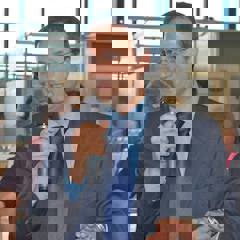
Francesco Cannavò, a Sicilian producer who sells saffron under the "Zafferano Rosso Etna" brand, explains that it is important to safeguard the product not only against the market but also to guarantee the best storage so as not to alter the spice's characteristics.
In addition, producers would receive certificates specifying the charac-teristics of the saffron deposited.
"There are multiple reasons why the bank was established. First of all - safety. If we consider that saffron can be more expensive than gold, it is not hard to see why safety is important. By hypothesising an average cost of $10 per gram, ten tons would cost $100 million. In addition, collecting the product in a single place would lead to lower costs and common storage parameters (temperature, light, humidity)."
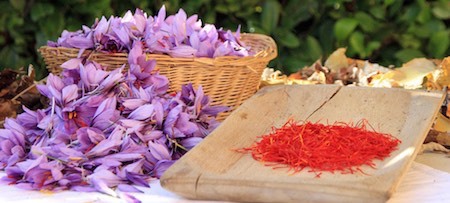
The certificate issued by the bank is useful to certify the quality of the product and its value, according to the category. In other words, certificates would become a currency officially recognised by a bank. This way, producers are paid off immediately and do not have to wait for the product to be sold.
"There are multiple reasons why the bank was established. First of all - safety. If we consider that saffron can be more expensive than gold, it is not hard to see why safety is important. By hypothesising an average cost of $10 per gram, ten tons would cost $100 million. In addition, collecting the product in a single place would lead to lower costs and common storage parameters (temperature, light, humidity)."
The certificate issued by the bank is useful to certify the quality of the product and its value, according to the category. In other words, certificates would become a currency officially recognised by a bank. This way, producers are paid off immediately and do not have to wait for the product to be sold.
"I think this system could become a sort of saffron stock exchange, as the value could change depending on the market. Buying certificates could therefore also mean losing out or making more money."
Something else that needs to be considered is the average retail price of the Iranian product, i.e. $2,000/kg, a figure that cannot even be compared with the other global markets. "I am not too surprised. Just think that you need to add costs regarding manual packaging, packaging materials, advertisement and transport costs to have a final price, and intermediaries need to make money too."
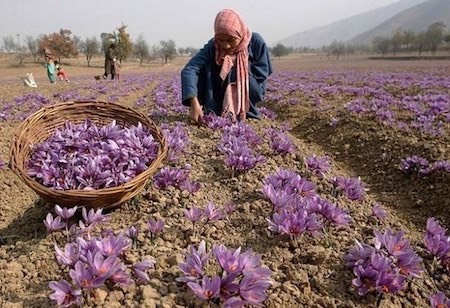
Of course, the low cost of Iranian labour and a production system that does not focus on quality makes all the difference. Excellent Iranian product can reach up to $65 per gram, double the value of Italian fully-traced and organic saffron.
"We are among those who focus on organic production and high-quality. The saffron produced by the Bio Campi cooperative has been certified as first-category according to standard ISO 3632-1:2011."