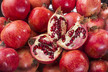
Despite persisting drought conditions in the Western Cape Province of South Africa, daytime temperatures are on average 5 - 8°C lower and nighttime temperatures much lower than last year. This has resulted in lower incidences of sunburn of pomegranates, which has in the past, with temperatures reaching over 40°C, forced Pomona pomegranate producers in the Swartland region of the Western Cape to send large parts of their harvest for processing.
“The fruit quality this year is absolutely fantastic. To deal with the drought we did a lot of fruit thinning throughout the season, so the fruit we have left is slightly smaller but the colour is good,” explains Brent Geddes of Pomona. “Also, there’s a lot less insect infestation, probably because of the drought, but also because of more focused spray programmes against codling moth and mealy bugs.”

The bat hotels that were put up in the orchards two years ago are slowly being populated by more bats, but the true impact of bats on the insect populations will only be felt in future. The biggest impact this year is probably the ‘friendlier’ or softer spray programme which has aided the build-up of natural predator populations which in turn assist in keeping harmful insects under control.
While the Pomona orchards are irrigated, the long-standing drought has adversely affected the water table levels as well as the water quality, which has become more saline. Fortunately pomegranates are drought-resistant and the two varieties planted by Pomona – Herskovitz and Wonderful – quite resilient, especially as the trees mature and more foliage develop.

Harvesting will start in about three to four weeks, with 20-30% going to the UK market, 30 – 40% to the EU and the remaining 30% to the Middle East and Far East. Pomona handles about 30 – 40% of exports themselves. The Herskovitz variety is harvested first, which is its main advantage, but the downside to this variety is a shorter shelf life and more quality issues, something not generally encountered with the later-maturing variety of Wonderful.
For more information:
Brent Geddes
Pomona
Tel: +27 (0) 82 619 2700
Email: [email protected]
www.pomegranatesdirect.com
Author: Carolize Jansen