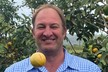
A five-week exchange programme to Europe has given a Cambridge kiwifruit grower a new appreciation of how highly the industry is regarded abroad. The programme organised by Zespri saw Miguel Peterle travel and work on kiwifruit orchards in France and Italy in February and April of this year.
The scheme allows people in the kiwifruit industry to exchange ideas and broaden their knowledge about the way it's grown in other parts of the world.
Peterle said he was was taken aback by the reverence French kiwifruit growers held for New Zealand growers and Zespri.
"New Zealand is world class in kiwifruit growing and most of the time they learn more from us than we from them," he said.
They looked to New Zealand as the ultimate standard to aspire to and having a New Zealand grower in their midst made him a mini celebrity.
He described the five weeks as an incredible experience. "I would do it every year if I could."
France has a small but established kiwifruit industry and many orchards grow the fruit in conjunction with pipfruit, usually apples.
Peterle was based largely in the town of Agen in the south of France, working on an large orchard that grew 80 hectares of apples and 16ha of kiwifruit.
He arrived in late winter-early spring and worked largely in the orchard, grafting and pruning apple and kiwifruit vines.
He quickly learned that growing kiwifruit in the Northern Hemisphere was full of challenges, the biggest being its weather.
Temperatures in the region fell as low as minus 19 degrees Celsius in the middle of winter. Hail, snow and heavy rain fell frequently.
The wet winter meant growers had to make sure there was adequate drainage for the vines. Conversely, they had to irrigate their crops with overhead sprinklers because summer rain was scarce.
"On the other hand, kiwifruit likes the cold. A cold winter means more fruit per plant," he said.
Another challenge in France was the grower culture. French growers were highly competitive with each other, a stark contrast to the co-operative New Zealand way of working together and sharing knowledge, he said.
Different market systems for French growers made them compete with each other because, unlike New Zealand's Zespri, there was no direct point of entry to the market.
Some of the crop was sold to packhouses and some directly to market. Growers with critical market information kept it to themselves, he said.
Traditionally, French growers grew the green Hayward variety and the industry often played second fiddle to apples, although the introduction of the Gold 3 variety has made kiwifruit more profitable. Prices varied. However, Gold 3 were generally a third higher than green.
The top French orchards yield as high as 40 tonnes a hectare. On average, crops were closer to 20-25 tonnes of green using a 'T' bar system. This technique grew the vines on T-shaped supports. In New Zealand, the bulk of orchards have shifted from a T bar to a pergola support system.
French growers are winning the battle against Psa thanks to good pruning practice and robust spraying. As soon as signs of the disease were seen on a vine, the infected area was cut and removed, he said.
Growers were also slowly taking up the Psa-resistant Gold 3 variety developed in New Zealand. There was some hesitation by growers after many had planted and lost money from using the Hort16, which was highly susceptible to Psa.