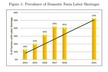
Hungary's fruit and vegetable sector is facing a huge shortage of seasonal labour, predicted to be between 50,000 to 80,000 seasonal workers. Due to this, scarcely anyone can be found to pick tomato, cucumber and apple crops, according to a report in the daily Világgazdaság on August 26.
Ferenc Ledó, president of the FruitVeb Hungarian Vegetable and Fruit Product Council, noted that seasonal work in fruit and vegetable growing and harvesting is available between the months of May and October, but that each harvest occurs in very concentrated periods - as little as two days in the cases of peaches or apples, according to the report. Today, however, it has become almost impossible to gather a sufficient workforce within such a short time frame, Ledó added.
“If apples are picked properly and precisely, they can fetch as much as HUF 100 per kilo, but if tossed or squeezed carelessly then they can only be sold for apple juice, often bringing only HUF 15/kilo on the market,” Ledó was quoted as saying.
Previously, student workers could be employed to fill the gaps, and even this summer some 20% more students have worked in the fields compared to last year. However, according to Ledó, at least 50% more students would be needed in order to fill every available place, according to the report. The problem would be resolved, he added, if higher wages could be offered to seasonal workers, or if labour-intensive sectors could be better mechanised. The investments required for new technology are beyond most producers, however.
Another solution could be to employ seasonal workers from abroad, notes Világgazdaság. In Spain, for example, 2–300,000 African seasonal workers work every summer, while Poland employs Ukrainian workers to pick fruit. However, the paper notes, this appears to be, politically, a very sensitive solution, due to the government’s stridently anti-immigration rhetoric.
(1 Hungarian Forint=0.0036 USD)
Source: bbj.hu