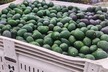
In Tamil Nadu, more farmers are turning to papaya cultivation because of the guaranteed returns and remunerative price for the produce. A group of farmers from Annamangalam took up papaya cultivation a year ago, due the growing demand for the fruit. Traders from Chennai arrive at the village periodically to buy the fruits, providing a guaranteed market for the farmers.
The farmers have raised a hybrid dwarf variety, ‘Red lady,’ which starts fruiting after a year. According to Horticulture Department officials, efforts have been taken to introduce three hectares under the crop under the National Agriculture Development Programme. The crop is raised mainly in and around Annamangalam and farmers from Veppur and Perambalur have also decided to raise the crop.
S. Vimal Joe, one of the farmers of Annamangalam, said it was not a easy job to cultivate papaya.
Apart from a huge investment of Rs. 200,000 for raising 6,000 saplings on six acres about a year ago, he had to incur heavy expenditure on labourers who plucked the fruits every day. Of the 6,000 saplings, only 4,000 germinated as the crop was prone to diseases and pest attack.
Traders preferred only quality fruits, he said. All through the first year, the crop needed proper care and maintenance.
He could harvest 500 to 700 kg of fruits every day which was sold for about Rs. 2,000 to Rs. 2,300.
His daily profit was about Rs.500. But scarcity of agricultural labour for harvesting posed a problem. “As its milk affected the skin of labourers, not many come forward to pluck the fruits,” he said.
(1 Indian Rupee=0.015USD)
Source: thehindu.com