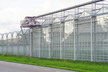
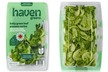
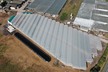
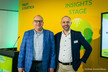
The family business from Austria has been supplying REWE International with tomatoes for years. REWE International initiated the planning and construction of the new greenhouse according to their sustainability criteria. “The Austrian customers prefer products produced in Austria, especially fruit and vegetables. The production of tomatoes in winter has been possible for quite some time and the shorter transport distances are a positive factor. However it is important to guaranty that the production doesn’t unduly burden the environment,” explains Frank Hensel, CEO of REWE International, about the project.
The production in greenhouses can cost a lot of energy, and therefore a lot of work has been put in to a more sustainable production. An important step is the significant reduction in energy consumption - by the use of technology such as controlled dehumidification, heat recovery, double glass, and special glass on the roof with a light transmission of 97% and additional isolation. And the greenhouse is mainly powered by the largest renewable biogas installation in Austria, and only renewable energy is used.
“We give the tomatoes all the time they need”
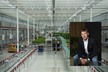
Christian Zeiler is satisfied with the new greenhouse: “We didn’t just create 80 more jobs and write another chapter in the history of our business, we also set new standards with regards to sustainable tomato production. I can say confidently that I managed the most innovative greenhouse in Europe. And I am convinced that you can notice in the taste that we give the tomatoes all the time they need to ripen.”
For a flourishing biodiversity in Austria
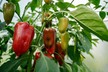
Both new Austrian tomato varieties will be immediately available and during the whole year at BILLA, MERKUR and ADEG under the label “Da komm‘ ich her” (That is where I come from) so that customers can recognize them as Austrian products. This label was introduced in 2014 and for every item sold from this label one eurocent goes to the association for the biodiversity in Austria. Many meadows, wetlands or moors are the habitat of rare and endangered animals and plant species and the association finances the preservation and development of these threatened habitats. At the end of 2015 over 2.5 million square meters of these habitats all over Austria should have been sponsored by this initiative. The goal is to protect a total of 10 million square meters of these areas.