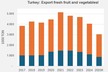
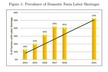
Heavy rain and hail last year resulted in reduced yields for the main types of fruit and vegetables, with some of the lowest levels in recent years. This in turn led to an increase in imports and a decline in exports, as shown by data compiled by the Ministry of Agriculture and the National Institute of Statistics. The situation in 2015 is expected to improve, although it is still too early to predict what the production volumes will be.
Tough year
The hailstorms last spring and heavy rains during the summer months caused serious losses for the agricultural sector. For example, last year's potato harvest amounted to 132 thousand tonnes, which is nearly 30% less than the previous year, when over 186 thousand tonnes were produced, which is comparable with yields of the past few years. In other vegetables, like cucumber, some slight increases were reported, although this was largely due to the larger quantities grown in greenhouses, where the climatic conditions have less of an impact.
The Ministry of Agriculture's data show that last year there was a reduction in the harvest volumes for most of the main fruits, including apples, cherries, peaches and apricots. The biggest drop was recorded by plums, with 24 tonnes harvested compared to 37 tonnes a year earlier.
Because of decreased production, there was naturally an increase in the country's fruit and vegetable imports. According to the National Statistics Institute, the volume of imported vegetables amounted to 253 thousand tonnes, the highest level in three years, compared to 225 thousand tonnes a year earlier. A similar situation was registered for fruit, with 267 thousand tonnes imported compared to just over 223 thousand tonnes in 2013. Thus, according to official statistics, imported fruits and vegetables represented about 1/3 of the produce sold in Bulgaria.
77 million Lev in subsidies annually up to 2020
In the period from next year to 2020, direct subsidies for fruits and vegetables will be increased. Under the so-called specific support, a total of over 77 million lev (39.7 million Euro) will be allocated annually to producers of different types of vegetables and fruits, such as tomatoes, cucumbers, peppers, cherries, apples, pears and more.
Source: capital.bg